
A Sweetgum with a Journey Beyond Earth
Among the many trees that make up the Marshall University Arboretum, one has a story unlike any other. Marshall University’s Artemis Moon Tree is an American Sweetgum (Liquidambar styraciflua) grown from a seed that traveled more than 1.4 million miles through space aboard NASA’s Artemis I mission.

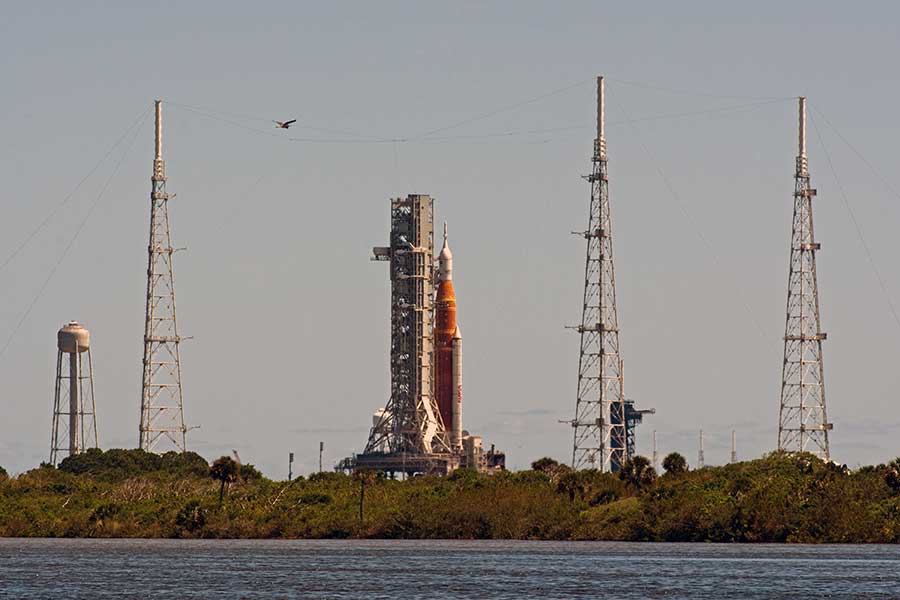
From November 16 to December 11, 2022, the seed orbited the Moon and returned safely to Earth as part of an initiative led by NASA and the U.S. Department of Agriculture Forest Service. After returning from space, the seed was germinated in a Forest Service nursery and eventually selected for planting at Marshall University.
Connecting Marshall to Space Exploration
The tree was planted on Marshall University’s Huntington campus on October 25, 2024, and later dedicated as a permanent part of the university’s arboretum. As one of a limited number of Artemis Moon Trees distributed across the United States, it serves as a living connection between scientific discovery, environmental stewardship, and humanity’s continued exploration of the Moon.
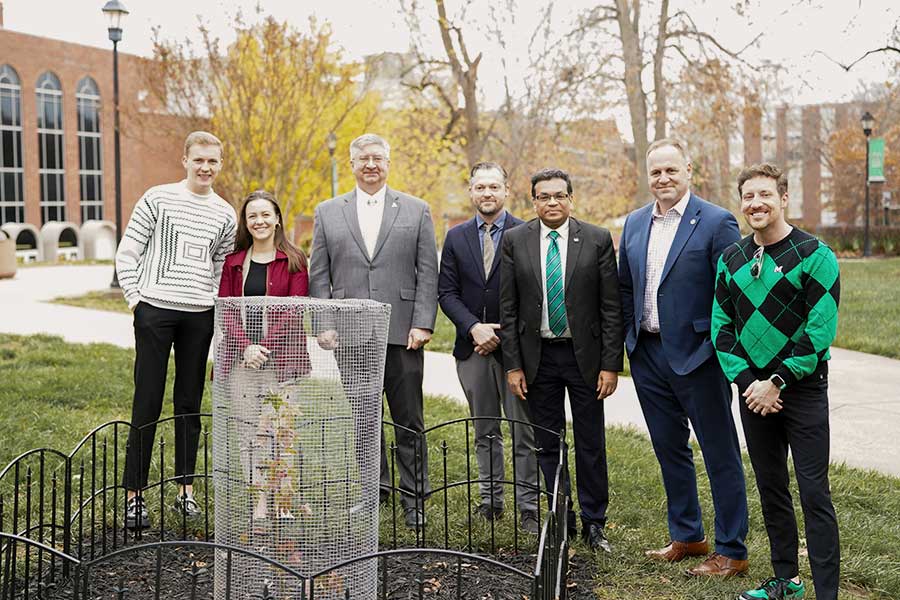
The Artemis Moon Tree also continues a tradition that began during the Apollo era, when seeds traveled to space and were later planted throughout the country as “Moon Trees.” Today, the Marshall University tree stands as a symbol of curiosity, innovation, and the enduring relationship between Earth and space.
About the American Sweetgum
The American Sweetgum is a native hardwood found throughout much of the eastern United States. It is easily recognized by its glossy, star-shaped leaves, which display vibrant shades of yellow, orange, red, and purple during autumn.
Historically, the tree’s aromatic resin was used for medicinal purposes and was sometimes chewed like gum, giving the species its common name. Sweetgum wood has also been used in a variety of products, including furniture, cabinetry, flooring, and railroad ties.
Learn more about American SweetgumA Living Symbol of Exploration
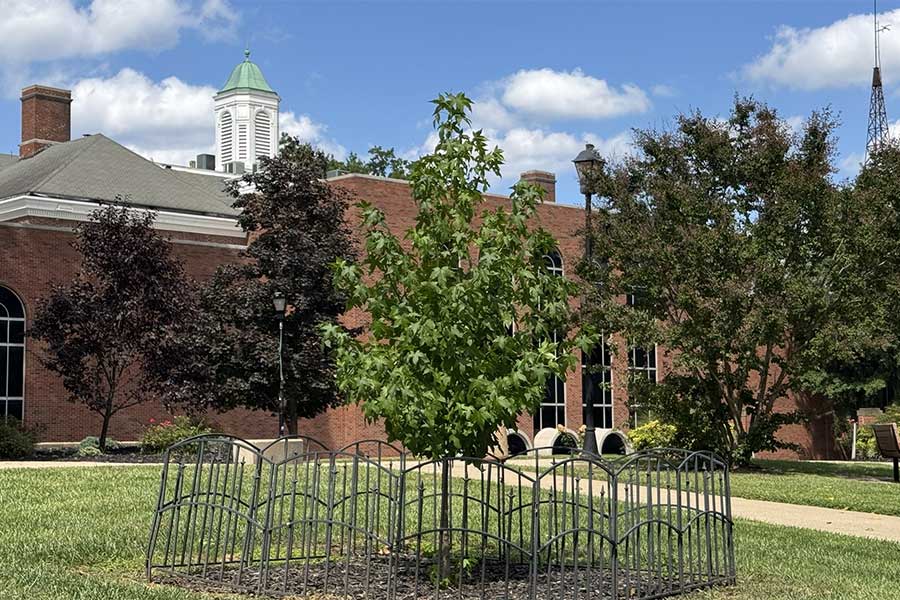
As the cornerstone of the Marshall University Arboretum, the Artemis Moon Tree represents more than a remarkable scientific journey. It reminds visitors that discovery can take many forms, whether exploring distant worlds, studying the natural environment, or learning from the living landscape around us.
The tree stands as an inspiration for students, faculty, staff, and visitors, encouraging future generations to pursue knowledge, protect natural resources, and reach beyond what is known.
Campus Location
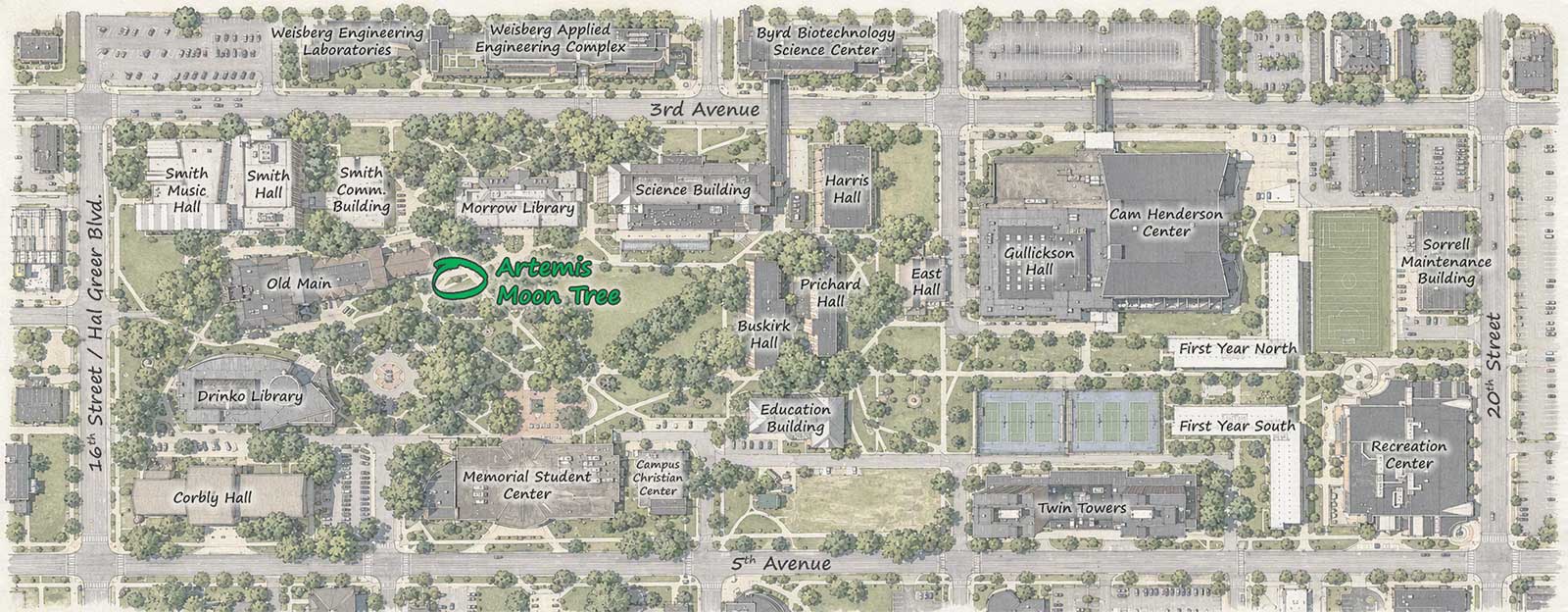
Visitors can find the Artemis Moon Tree southeast of Old Main near several campus walkways. The map below highlights its location. Click on the map to view a larger version.
Learn More
- Marshall University dedicates Artemis Moon Tree on the Huntington campus
- NRE faculty member Rick Gage leads effort to bring Moon Tree to campus
- NASA Artemis Moon Tree Program
Quick Facts
Common Name: American Sweetgum Moon Tree
Scientific Name: Liquidambar styraciflua
Mission: NASA Artemis I
Spaceflight Dates: November 16 to December 11, 2022
Distance Traveled: Approximately 1.4 million miles
Planted at Marshall University: October 25, 2024