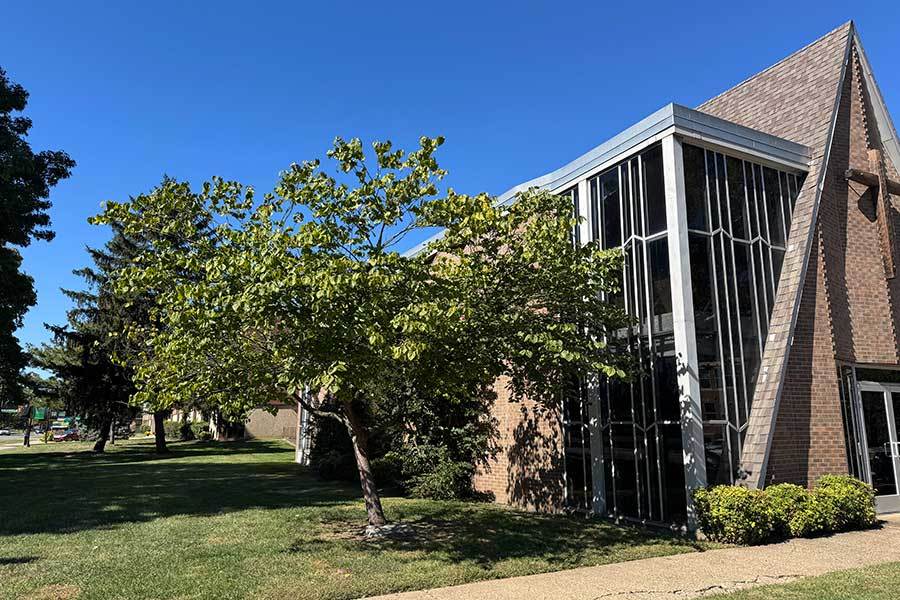
A Memorial to Religious Freedom and Human Dignity
Near the southeast corner of the Campus Christian Center stands a memorial Eastern Redbud (Cercis canadensis) dedicated to the memory of Baháʼís who lost their lives during the persecution of the Baháʼí community in Iran.
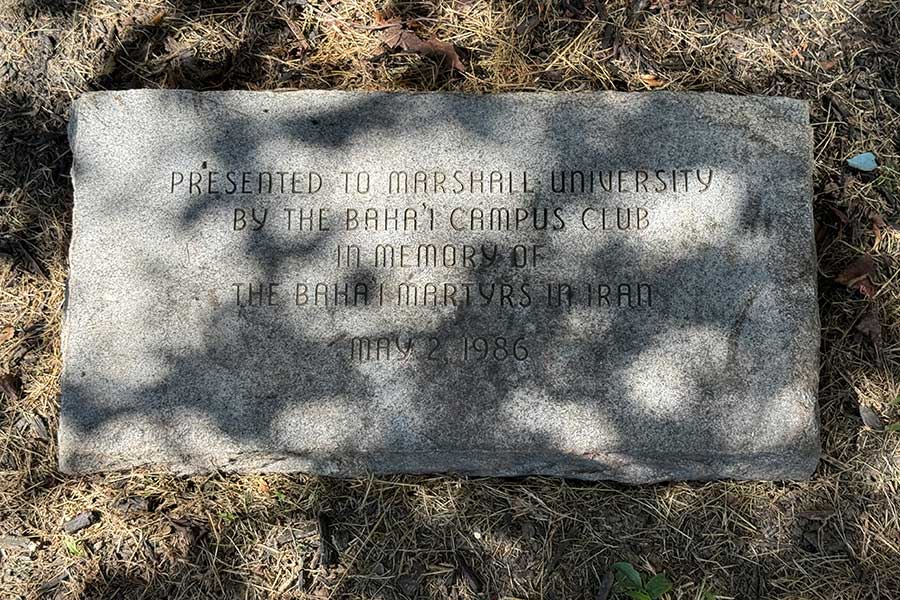
A stone marker at the base of the tree bears the inscription:
Presented to Marshall University by the Baháʼí Campus Club in memory of the Baháʼí martyrs in Iran
May 2, 1986
The tree serves as both a memorial and a reminder of the importance of religious freedom, human rights, and respect for people of all faiths.
The Baháʼí Faith
The Baháʼí Faith is a worldwide religion founded in nineteenth-century Persia, now Iran. Baháʼís believe in the unity of humanity, the equality of women and men, the harmony of science and religion, the importance of education, and the spiritual unity of the world’s major religions.
By the 1980s, Baháʼí communities were established throughout the United States, including Huntington and Marshall University, where students organized through the Baháʼí Campus Club and participated in educational and service activities on campus.
Persecution in Iran
The Baháʼí Faith originated in Iran, but its followers have faced periods of persecution there since the nineteenth century. Following the Iranian Revolution of 1979, the situation worsened dramatically. Baháʼís were dismissed from jobs, denied educational opportunities, imprisoned, and, in many cases, executed because of their religious beliefs. International organizations, governments, journalists, and religious leaders around the world publicly condemned the persecution.
During the early 1980s, the Marshall University Baháʼí Campus Club and members of the local Baháʼí community actively raised awareness of the situation through educational events, letters, and public advocacy. Articles published in The Parthenon documented local efforts to support persecuted Baháʼís and inform the campus community about events in Iran.
A Campus Memorial
The dedication of the memorial tree on May 2, 1986, reflected a broader effort by Baháʼís and their supporters to call attention to the persecution taking place in Iran. Rather than honoring a single individual, the tree commemorates the many Baháʼís who suffered and died because of their faith.
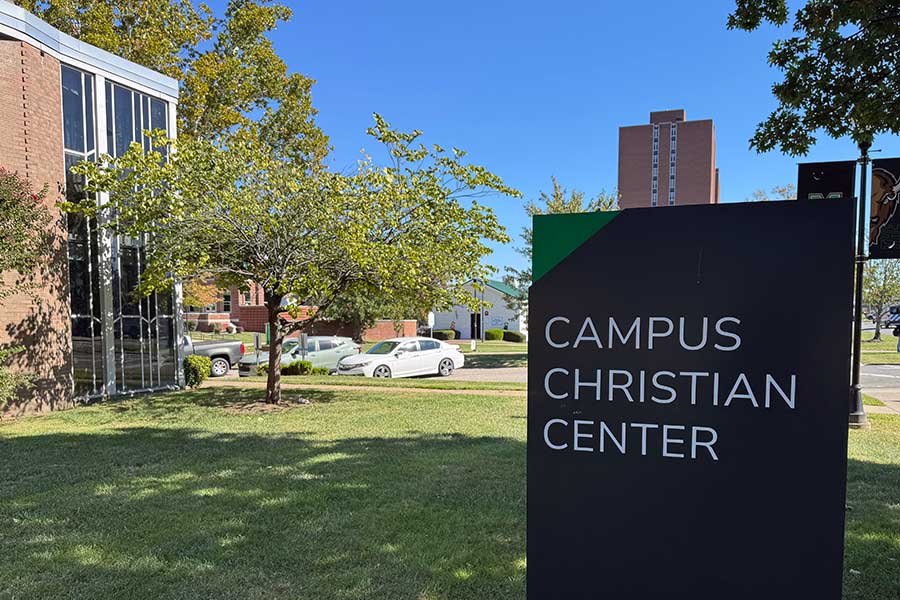
The location of the memorial near the Campus Christian Center highlights the longstanding presence of religious organizations and interfaith dialogue within the Marshall University community.
The Memorial Tree Today
Today, the Eastern Redbud continues to grow as a living memorial within the Marshall University Arboretum. Each spring, its vibrant pink blossoms provide one of the earliest displays of color on campus, marking the changing seasons while preserving the memory of those commemorated by the dedication.
Learn more about Eastern RedbudAs both a memorial and a landscape feature, the tree reflects the arboretum’s role in preserving stories that connect people, history, and place across the Marshall University campus.
Campus Location
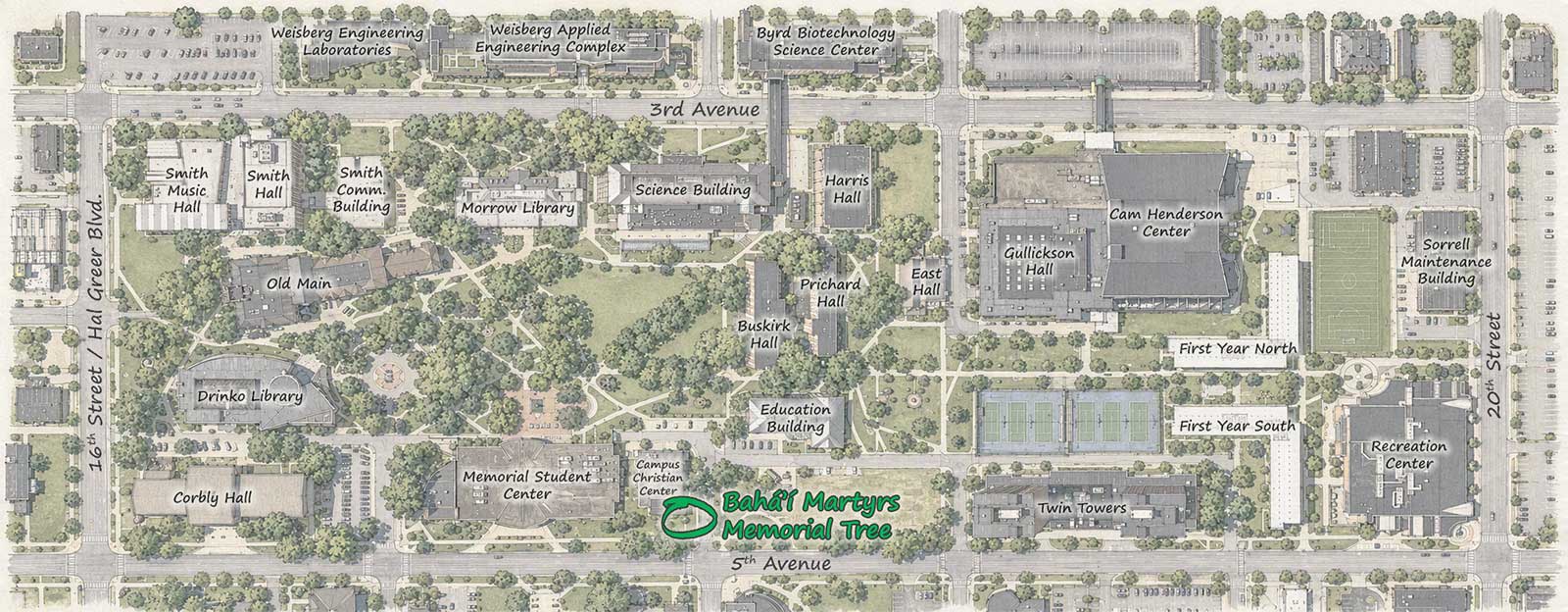
Visitors can find the Baháʼí Martyrs Memorial Tree at the southeast corner of the Campus Christian Center. The map below highlights its location. Click on the map to open a larger version for a closer look.
Learn More
- Baha’i members commemorate Iranian martyrs, The Parthenon, October 29, 1985
- Campus Baha’is seek help for Iranian counterparts, The Parthenon, April 1, 1982
- Baha’i persecution gains attention, The Parthenon, September 29, 1983
- Baha’i to speak at CCC tonight, The Parthenon, February 21, 1969
Quick Facts
Name: Baháʼí Martyrs Memorial Tree
Species: Eastern Redbud (Cercis canadensis)
Location: Southeast corner of the Campus Christian Center
Dedicated: May 2, 1986
Dedicated By: Marshall University Baháʼí Campus Club
Commemorates: Baháʼí martyrs in Iran
Memorial Type: Tree and stone marker
Category: Memorial Trees