An Invasive Threat to Ash Trees
The Emerald Ash Borer (EAB) is an invasive beetle that has caused widespread destruction of ash trees throughout North America. Since its discovery in North America in 2002, Emerald Ash Borer has caused widespread mortality of ash trees across the United States and Canada, making it one of the most destructive forest insects ever introduced to the continent. The beetle has been found in West Virginia and remains one of the most significant threats to ash tree populations.
The Marshall University Arboretum includes ash trees within its collection, making awareness and monitoring of Emerald Ash Borer an important part of responsible tree stewardship.
What is the Emerald Ash Borer?
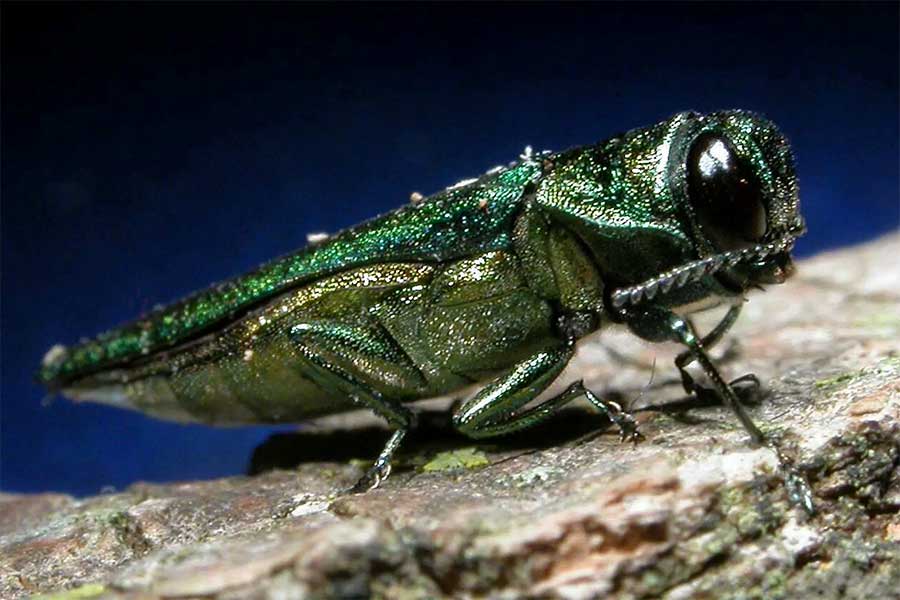
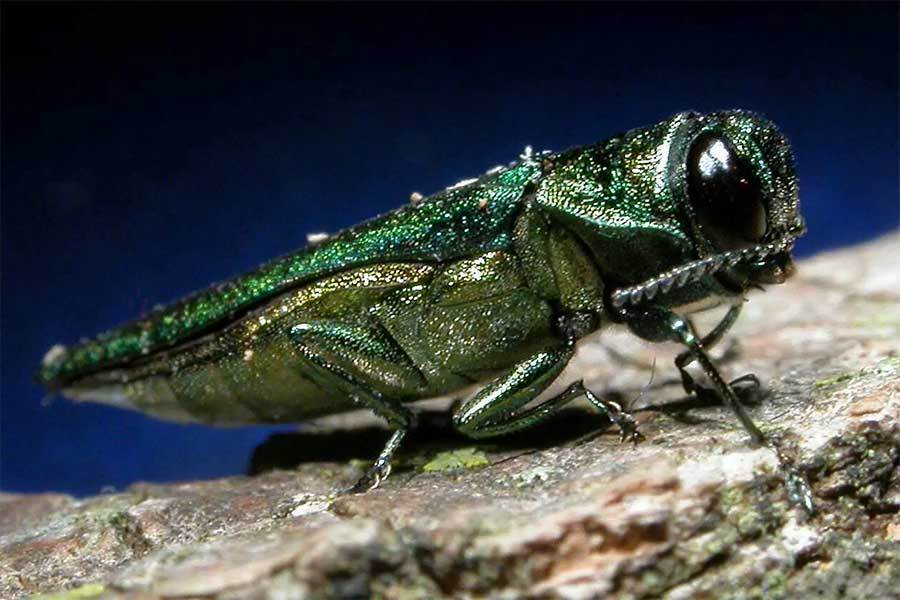
The adult Emerald Ash Borer is a small, metallic green beetle approximately one-half inch long. Its bright green coloration and flattened body make it distinctive, although the insect can be difficult to spot in natural settings due to its small size. Beneath its wing covers are characteristic purple abdominal segments.
While the adult beetle causes limited damage, its larvae are responsible for the devastating effects on ash trees.
How does it damage trees?
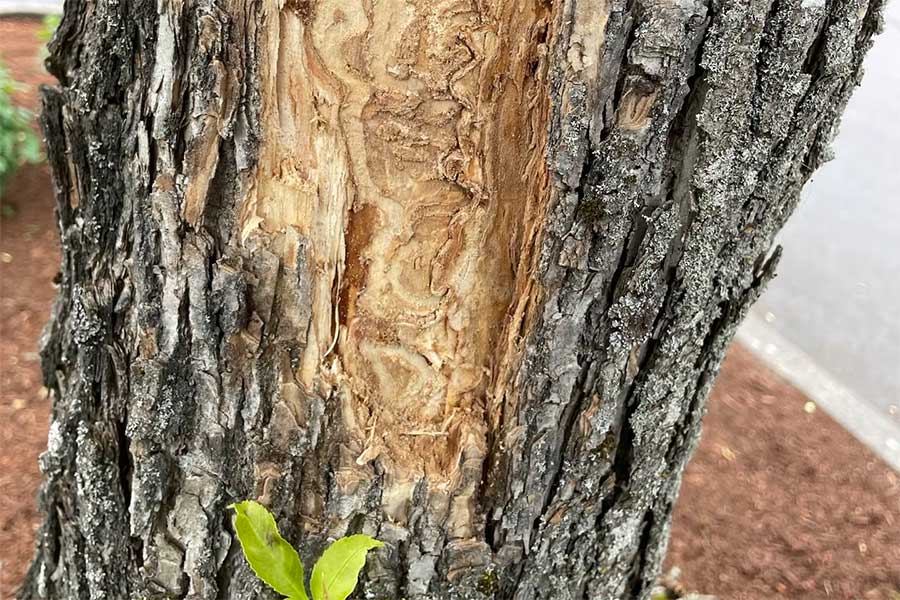
After hatching, Emerald Ash Borer larvae tunnel beneath the bark of ash trees, feeding on tissues that transport water and nutrients throughout the tree. These tunnels disrupt the tree’s ability to move food and water, effectively starving the tree over time. As infestations progress, affected trees decline and eventually die.
Common signs of infestation can include:
- Thinning or dying branches in the upper canopy
- Increased woodpecker activity
- D-shaped exit holes in the bark
- Sprouts emerging from the trunk or roots
- Vertical bark splits that reveal feeding galleries beneath the surface
How did it arrive in North America?
Researchers believe Emerald Ash Borer was accidentally introduced from Asia through infested wood packing materials used in international shipping. The insect was first detected in southeastern Michigan in 2002 and has since spread to numerous states and provinces.
How does it spread?
Adult beetles can fly and naturally spread to nearby areas, but most new infestations occur when people unknowingly transport infested ash materials. Firewood, logs, branches, nursery stock, stumps, and wood chips can all harbor Emerald Ash Borer larvae. Moving these materials from one location to another can introduce the insect into previously unaffected areas.
For this reason, one of the most important recommendations from forestry and conservation organizations is simple:
Don’t move firewood. Burn it where you buy it.
Why it Matters
Emerald Ash Borer infestations have already cost municipalities, property owners, and industries millions of dollars in tree removal, treatment, and replacement expenses. Beyond the economic impact, the loss of ash trees alters forest ecosystems, reduces wildlife habitat, and changes the character of landscapes and communities.
Protecting remaining ash populations requires ongoing monitoring, public awareness, and responsible management practices.
Ash Trees on Buskirk Field
The impact of Emerald Ash Borer can be seen directly in Marshall University’s landscape. Ash trees formerly located along Buskirk Field were removed in 2015 after becoming affected by Emerald Ash Borer infestations. A display was established at the site using a remaining ash stump to help visitors understand the life cycle of wood-boring insects and their effects on trees. The stump has since been removed due to safety concerns, but the story remains an important example of the impact invasive species can have on campus landscapes and urban forests.
Emerald Ash Borer and the Marshall University Arboretum
The Marshall University Arboretum uses its tree collection as a living laboratory for education, conservation, and stewardship. The Emerald Ash Borer serves as an important example of how invasive species can affect urban forests and natural ecosystems alike.
By learning about threats such as Emerald Ash Borer, visitors gain a deeper understanding of the challenges involved in maintaining healthy and resilient tree populations for future generations.
Learn More
Quick Facts
Common Name: Emerald Ash Borer
Scientific Name: Agrilus planipennis
Native Range: Asia
First Detected in North America: 2002
Primary Host Trees: Ash species (Fraxinus)
Adult Size: Approximately 1/2 inch long
Notable Characteristic: Metallic green coloration