Living Memorials of Remembrance and Hope
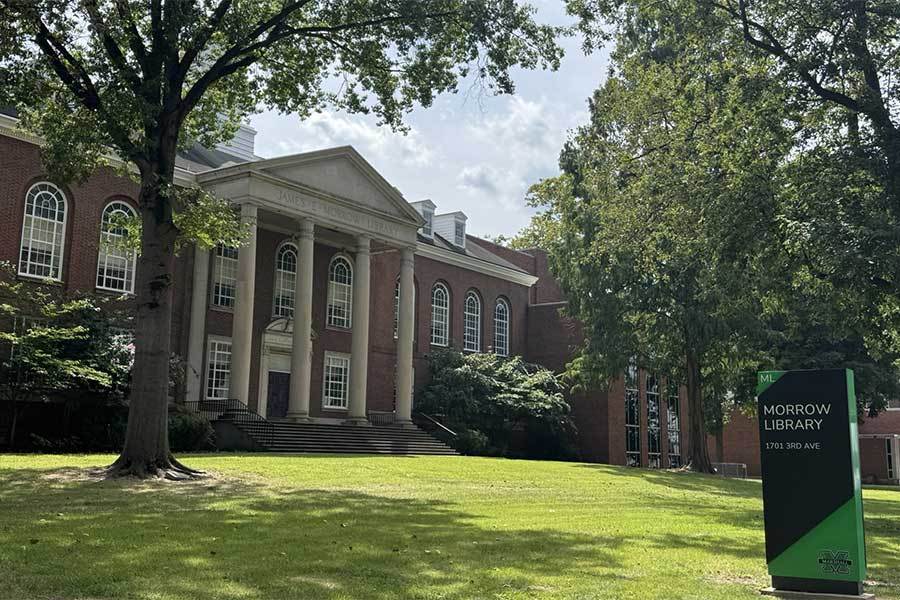
Standing on either side of the historic north entrance to Morrow Library, the Freedom Trees are among the most meaningful commemorative trees in the Marshall University Arboretum. Established in 1972, the trees serve as living memorials to prisoners of war, those missing in action, Capt. John Scott Albright II, and the many individuals whose sacrifices shaped a generation.
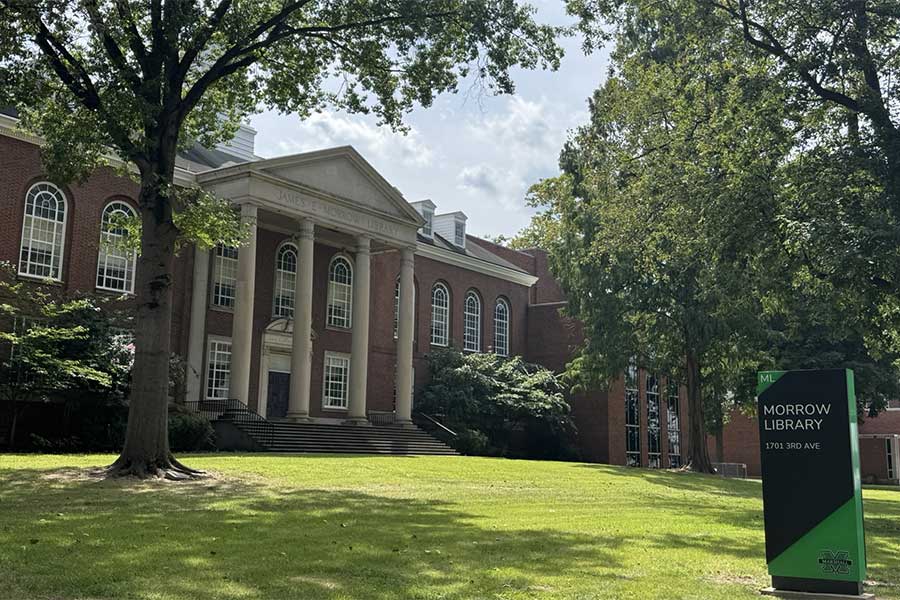
Although the north entrance is no longer used, the Freedom Trees continue to frame the grand doorway, their canopies rising above the stately facade of Morrow Library. For more than five decades, they have served as silent reminders of remembrance, resilience, and the enduring pursuit of freedom.
A Pair of Freedom Trees
The Freedom Trees consist of two different species planted on opposite sides of the library’s historic entrance.
East Freedom Tree
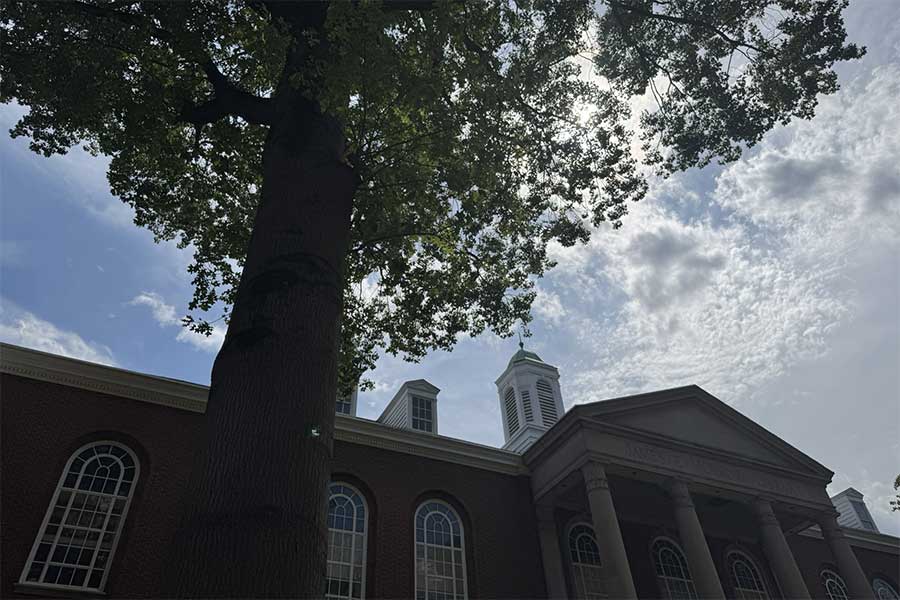
The eastern tree is a Pin Oak (Quercus palustris), a native American oak known for its strong form and distinctive branching habit.
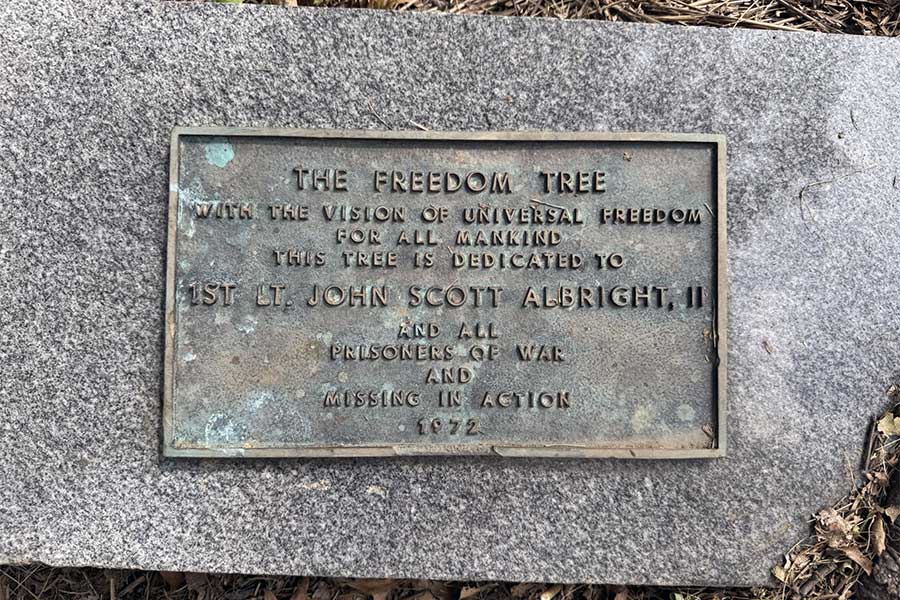
Learn about Pin OakA stone marker at its base bears the inscription: “The Freedom Tree – With the vision of universal freedom for all mankind, the tree is dedicated to 1st Lt. John Scott Albright, II and all prisoners of war and missing in action. 1972”
West Freedom Tree
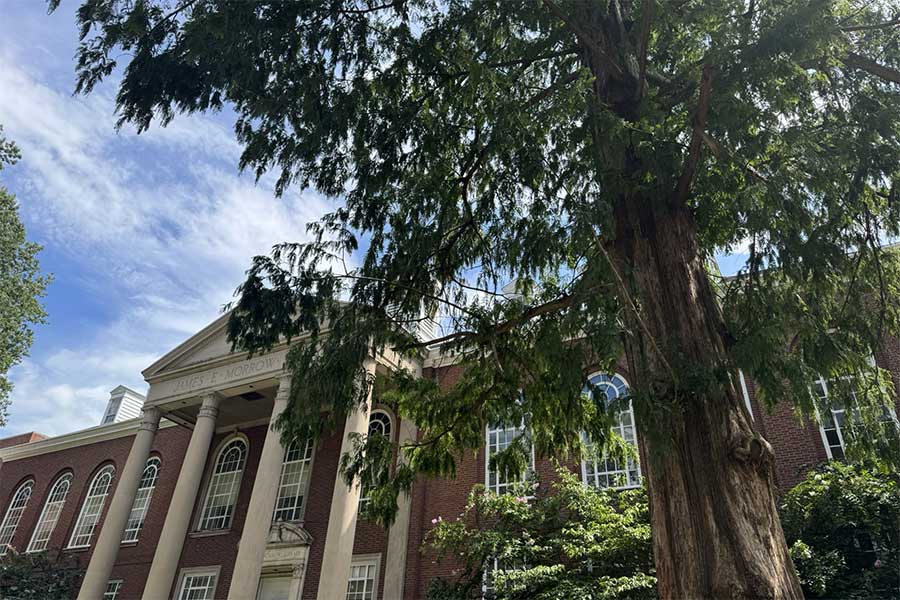
The western tree is a Dawn Redwood (Metasequoia glyptostroboides), a fast-growing deciduous conifer known for its feathery foliage, towering height, and remarkable history. Presumed extinct until its rediscovery in China during the twentieth century, the Dawn Redwood has become a popular specimen tree in arboretums, parks, and campuses around the world.
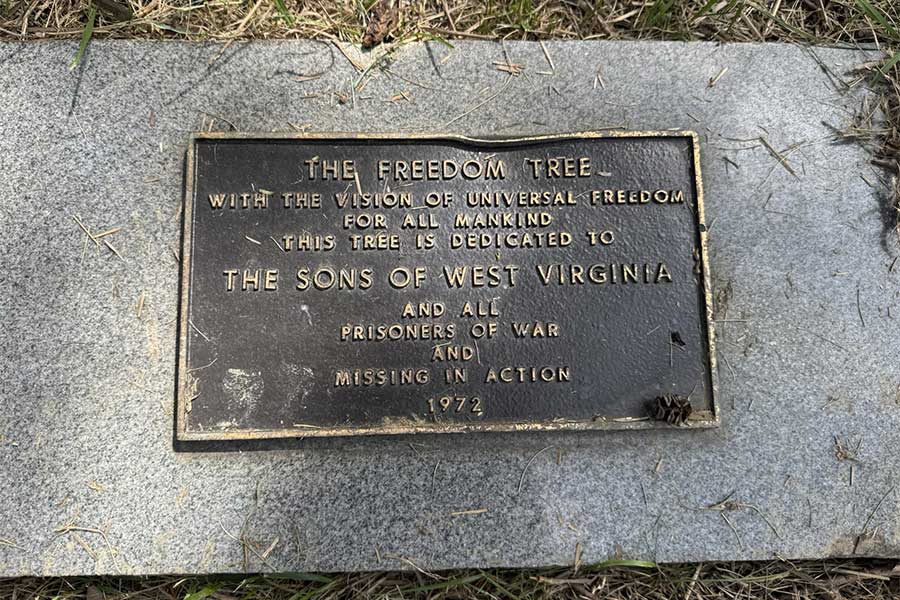
Learn about Dawn RedwoodA matching marker nearby reads: “The Freedom Tree – With the vision of universal freedom for all mankind, this tree is dedicated to The Sons of West Virginia and all prisoners of war and missing in action. 1972”
Together, the two trees create a living memorial that has become part of the landscape and history of Marshall University.
Homecoming 1972 and the Freedom Trees
The story of Marshall University’s Freedom Trees began during Homecoming 1972. Rather than celebrating with many traditional activities, students chose a theme of “A Homecoming for Those Who Can’t Come Home” to honor prisoners of war and those listed as missing in action during the Vietnam War. Contemporary university publications describe the planting of a Freedom Tree near Morrow Library in recognition of West Virginians who were prisoners of war or missing in action.
The event reflected the atmosphere of the era. The Vietnam War was ongoing, and students sought a meaningful way to recognize those whose absence was being felt by families and communities across the nation. Years later, participants recalled the tree-planting ceremony as one of the defining moments of Homecoming 1972 and a lasting symbol of remembrance.
A second Freedom Tree dedication honored Capt. John Scott Albright II, a Huntington native and graduate of the United States Air Force Academy who had been listed as missing in action since December 13, 1968, when his aircraft was lost over Laos. The dedication, requested by his parents, expanded the Freedom Tree memorial on campus and reinforced its connection to service members who never returned home.
The Freedom Tree Movement
The Freedom Trees on Marshall’s campus were planted during a nationwide movement that emerged in the final years of the Vietnam War and continued in the years immediately following the conflict. Freedom Trees were established across the United States to honor prisoners of war and service members missing in action while encouraging continued public awareness of their sacrifices and unresolved fates.
The movement served as a visible reminder that many families continued to await answers regarding loved ones who had not returned home from military service.
The Freedom Trees Today
More than fifty years after their dedication, the Freedom Trees remain defining features of the landscape surrounding Morrow Library. Their trunks have expanded, their branches have stretched high above the building, and their presence has become woven into the campus environment.
Though many visitors may pass beneath them without knowing their story, the trees continue to fulfill the purpose for which they were planted: serving as enduring symbols of freedom, remembrance, and hope.
Campus Location
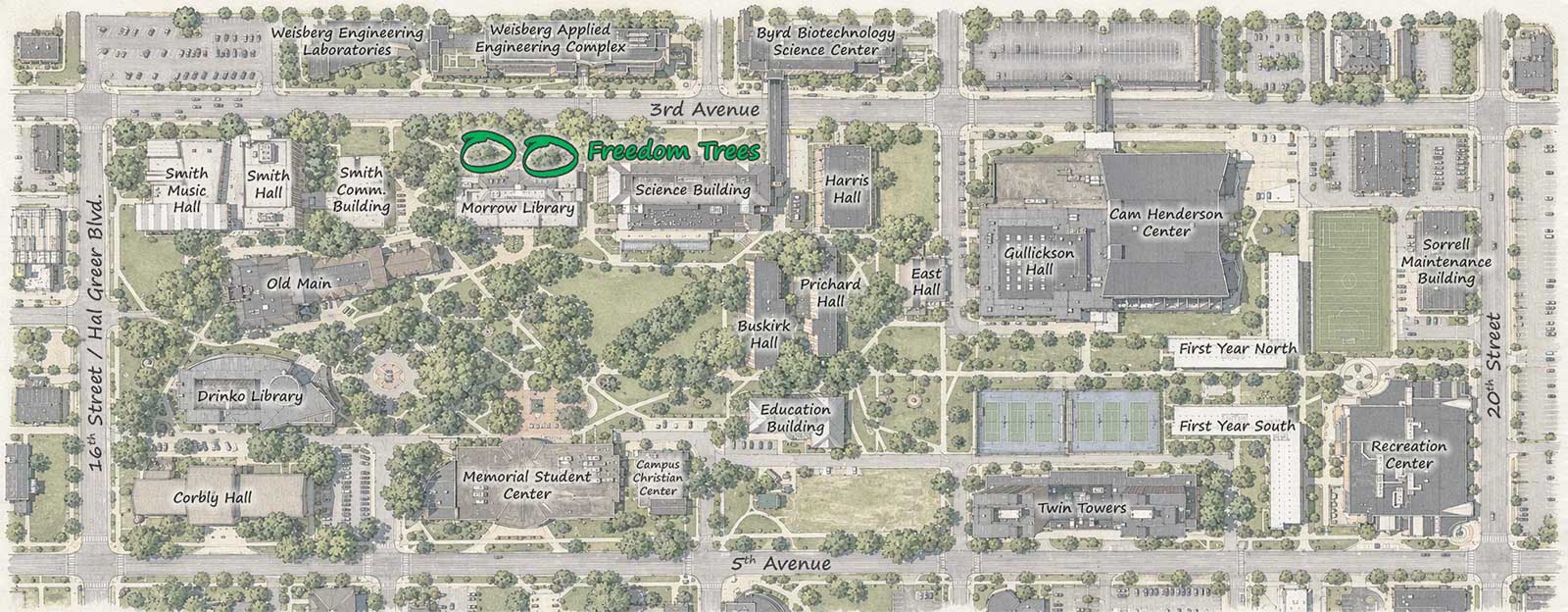
Visitors can find the Freedom Trees at the historic north entrance of Morrow Library, where they flank the building’s former primary entrance. The map below highlights their location. Click on the map to open a larger version.
Learn More
- Freedom Tree, Marshall University News Letter, October 20, 1972
- Their Son – Memorial ceremony dedicated to MIA, The Parthenon, December 6, 1973
- ’72 Freedom Tree stands as tribute, The Parthenon, December 6, 1973
- The Historical Marker Database
Quick Facts
Species: Pin Oak (Quercus palustris) and Dawn Redwood (Metasequoia glyptostroboides)
Location: Historic north entrance of Morrow Library
Dedicated: 1972
Commemorates: Prisoners of war, service members missing in action, 1st Lt. John Scott Albright II, and The Sons of West Virginia
Associated Movement: National Freedom Tree initiative of the Vietnam War and post-war era