A Tiny Insect with a Major Impact
The Hemlock Woolly Adelgid (Adelges tsugae) is an invasive insect that poses one of the greatest threats to Eastern Hemlock populations in eastern North America. Although small and easily overlooked, this aphid-like insect has caused widespread mortality of hemlock trees throughout much of the Appalachian region.
Since its arrival in the United States, the Hemlock Woolly Adelgid has spread across numerous states, affecting forests, parks, natural areas, and urban landscapes. Its impact extends beyond individual trees, altering entire ecosystems that depend on Eastern Hemlock for shade, habitat, and ecological stability.
What Is Hemlock Woolly Adelgid?
The Hemlock Woolly Adelgid is a tiny invasive insect native to eastern Asia. It feeds on Eastern Hemlock and Carolina Hemlock by attaching itself to the base of needles and extracting nutrients from the tree.
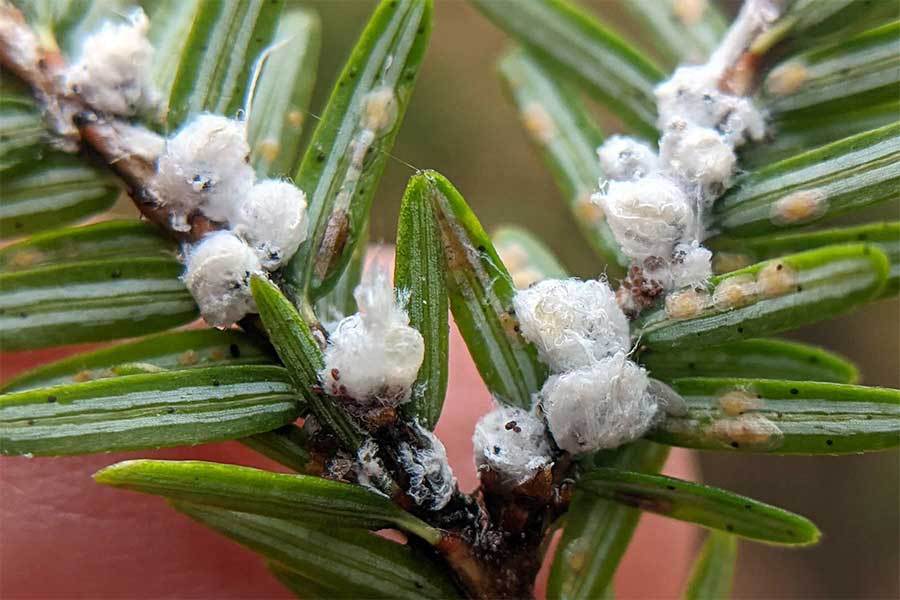
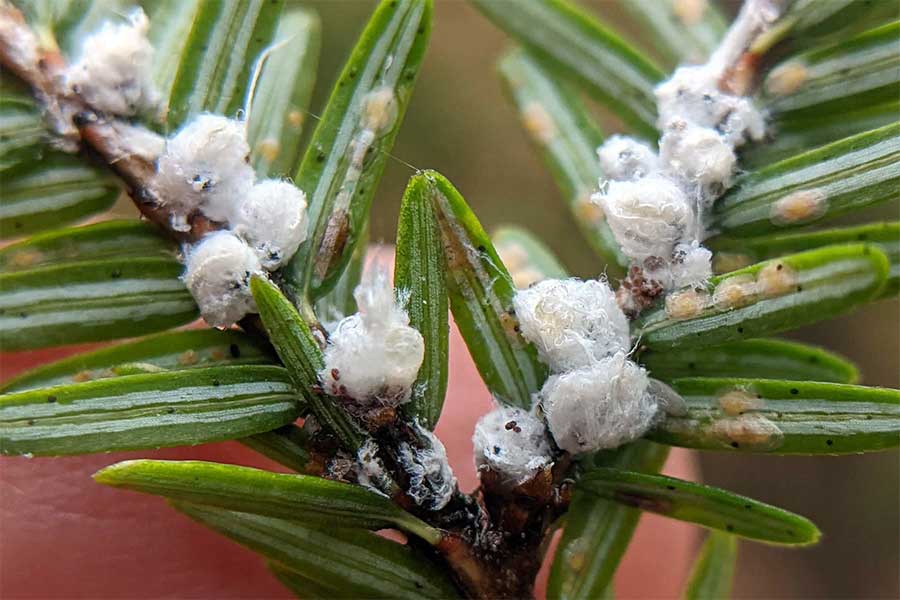
The insect is most easily recognized by the small white, cotton-like masses it produces on twigs and branches. These woolly coverings protect eggs and young insects while creating a distinctive sign of infestation.
Signs and Symptoms
Common signs of Hemlock Woolly Adelgid infestation include:
- White, cotton-like masses at the base of needles
- Graying or dulling foliage
- Needle loss
- Thinning canopy
- Dead branches, particularly in the lower canopy
- Progressive decline and eventual tree mortality
Infested trees may survive for several years, but repeated feeding weakens the tree and can ultimately lead to death.
Why Eastern Hemlock Matters
Eastern Hemlock is often considered a foundation species because it plays a critical role in shaping forest ecosystems.
Hemlock forests provide:
- Year-round habitat for wildlife
- Cool, shaded environments along streams
- Protection for aquatic ecosystems
- Stabilization of soils and streambanks
- Unique microclimates that support specialized plants and animals
The loss of mature hemlocks can dramatically alter forest structure, water quality, and habitat conditions.
Managing the Threat
Scientists, foresters, and land managers continue to use a variety of approaches to help protect hemlock populations, including:
- Monitoring and early detection
- Biological control using predatory insects
- Targeted insecticide treatments
- Conservation of healthy trees
- Research into long-term management strategies
While significant challenges remain, these efforts have helped slow impacts in some areas and preserve important hemlock stands.
Eastern Hemlock and the Marshall University Arboretum
The Marshall University Arboretum includes Eastern Hemlock within its collection, providing visitors an opportunity to learn about a species facing ongoing conservation challenges. The story of Hemlock Woolly Adelgid serves as an important reminder of how invasive species can affect forests and landscapes across an entire region.
Like Emerald Ash Borer, Dutch Elm Disease, and Butternut Canker, Hemlock Woolly Adelgid demonstrates the importance of monitoring tree health, protecting biodiversity, and preserving native species for future generations.
Quick Facts
Common Name: Hemlock Woolly Adelgid
Scientific Name: Adelges tsugae
Primary Hosts: Eastern Hemlock (Tsuga canadensis) and Carolina Hemlock (Tsuga caroliniana)
Native Range: Eastern Asia
First Detected in Eastern North America: 1950s
Primary Impact: Needle loss, canopy decline, and tree mortality
Identifying Feature: White, cotton-like masses on hemlock twigs