Our History
Background & Context
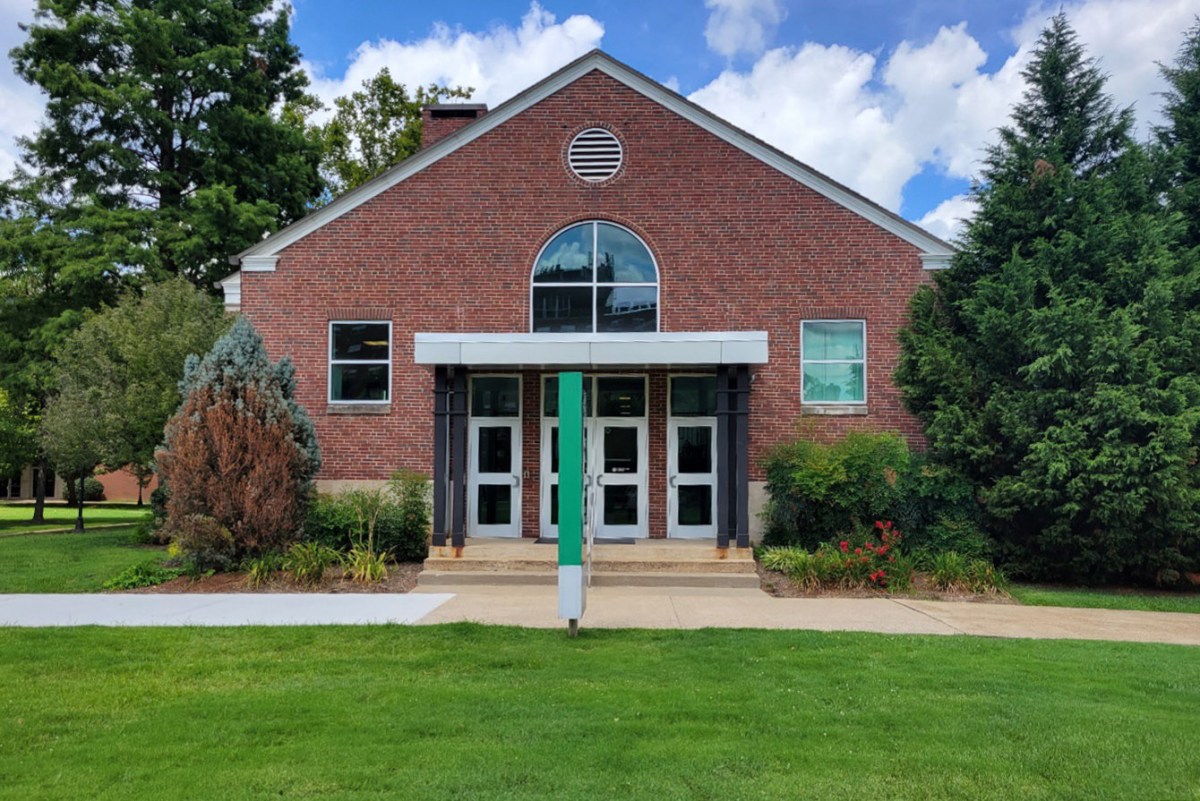
The Center for Student Success operates the East Hall Learning Hub.
The Learning Hub started in the Fall of 2020 as the Virtual Learning Hub during the Fall of 2020 where students could come to take their online and virtual classes as well as do homework and meet with other students. This was the first semester after the COVID 19 lockdowns, and the only students living in the residence halls were freshmen, taking most of their classes virtually or online, far from home and feeling robbed of the fanfare and celebration that traditionally accompanies the start of college.
From the very beginning, East Hall was set up to recognize the reality of our students’ situations: their bodies had been in fight-or-flight for almost a year, and the natural stresses that typically accompany late teens and early-twenties were exponentially multiplied. Students reported feeling completely out of control and also the opposite: not motivated to do anything.
The Students We Serve
Some of our students come from stable and secure homes, others come from brokenness and pain, uncertainty and fear, some from circumstances that are heartbreaking and hard to imagine. We have students who
- …have aged out of foster care and are homeless until they move into the dorms.
- …have been raised by grandparents who now need their help.
- …have parents and siblings who are homeless and depend on couch-surfing.
- …fight addiction daily.
- …are system-affected, whose parents are incarcerated or never in their lives.
- …have witnessed horror on foreign battlefields or as first responders.
- …are neurodivergent and often underestimated.
- …suffer from poor mental health.
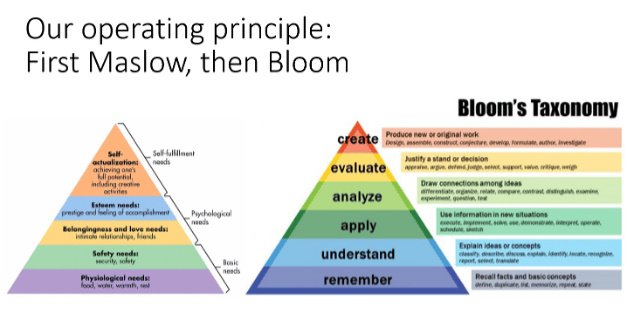
East Hall is big on forming community and making students feel included, and we’ve gotten very good at fostering belonging and self-esteem, easing loneliness, homesickness and stress — a good foundation for our goal as a learning hub.
Welcoming Spaces
As we came out of the pandemic, East Hall continued to grow into a place of welcome.
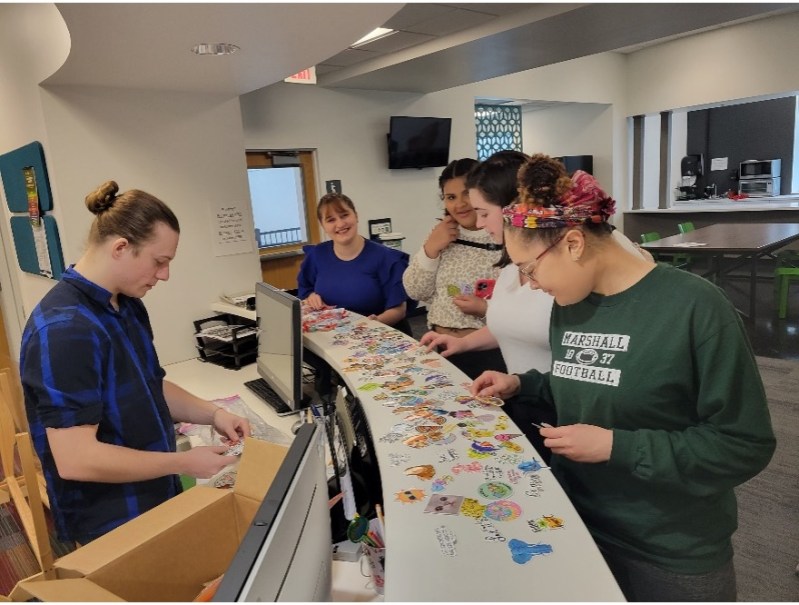
Occasional Lego contests, sticker giveaways and bigger seasonal events encourage community and bring joy to the building.
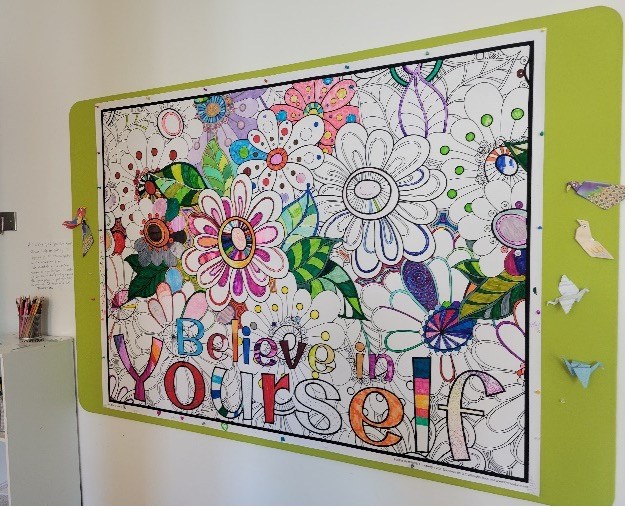
Students have access to free printing, basic school tools (stapler, hole puncher, highlighters), relaxation activities (coloring, origami) and healthy snacks.
We have umbrellas and rain ponchos on hand to get students to their classes on rainy days, and we even have clean, dry socks for students who walk in with wet feet. Mom-hugs are available upon request.
Video Viewing
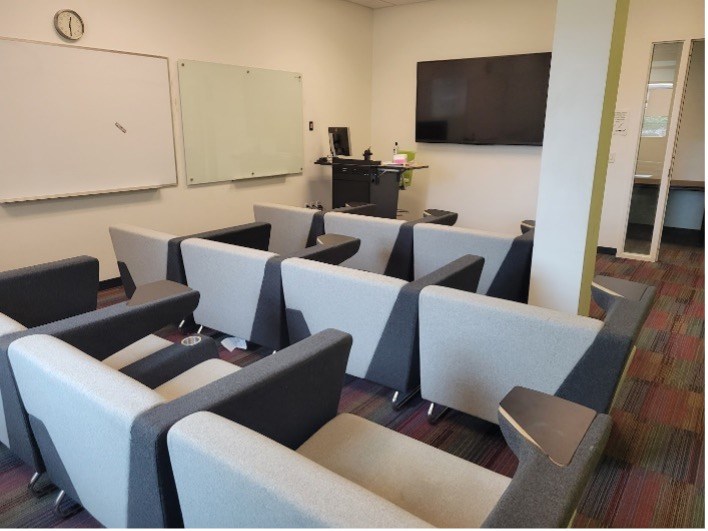
Faculty whose courses require watching a film(s) outside of class can set up screening(s) in East Hall. This way, students not only have guaranteed access to the film(s) but can also experience watching the film with classmates while enjoying complimentary snacks and discussing the assignment, all of which builds community and increases a student’s sense of connection to the campus.
Study Groups
In the aftermath of the pandemic, several study groups formed organically in East Hall using unoccupied classrooms and gathering spaces. These groups included several small groups of Nursing students who met sporadically, a handful of students who were enrolled in Anatomy who met only before exams, and a larger group of Chemistry/Biochemistry/Biology majors who met daily in EH 225, often for long hours in the evenings. In the summer of 2023, a study group also formed in response to struggles in CHM 212 when no tutoring was available.
Of these groups, the story of the Chemistry/Biochemistry/Biology majors who met daily became one of CSS’s most successful efforts in terms of academic success and student persistence, and it was large enough to yield metrics that mattered statistically.
The group formed in the Fall of 2021 in response to the challenges of Organic Chemistry I (CHM 355) and quickly grew to fourteen students who met daily and took up residence in EH 225. This group stayed together for the remainder of their classes until graduation, meeting daily for Organic Chemistry II (Spring 2022), Introductory Biochemistry (Fall 2022), Intermediate Biochemistry (Spring 2023), and then a wider range of classes depending on their specific majors for the AY 2023-2024 because by then the students had become close friends and in the habit of holding one another accountable for learning the material and preparing for med school or grad school. They had become a close cohort, welcoming newcomers with each course. At its largest, the group consisted of twenty-one active students.
The long-term data for this study group showed that members of this group consistently did well grade-wise in their challenging upper-division science classes and had a 100% graduation rate and a 100% graduate/professional school acceptance rate.
A notable story: a student who joined this study group in her senior year was taking Introductory Biochemistry for the 3rd time. This student had Prof. X as their instructor the previous fall and failed out of the class. They then tried again with a different professor in the spring and once again were unsuccessful. Finally, that semester, they asked Prof. X for any additional help; she sent the student in the direction of the study group which was by then well-known in the Chemistry Department. The student was immediately embraced by the group regulars; this was the last class the student needed to pass to graduate, and the student passed the class with a B and graduated December 10, 2022.
The success of these students – specifically the impact of intensive peer support –paved the way for the introduction of Supplemental Instruction in the fall of 2022 and continued support for student-led study groups that either formed organically or put together by the Center for Student Success.
Recognizing the value of a dedicated space for these learning opportunities, a large under-used classroom in East Hall was renovated into three study rooms.
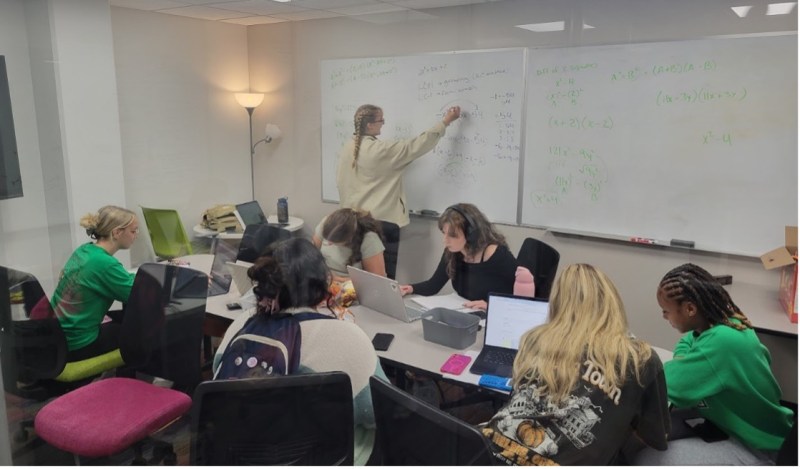
The study rooms have whiteboard walls and basic study supplies; a snack table stands in the hallway connecting the three spaces. Study Groups signed up with CSS can initially schedule up to three two-hour sessions per week; if the group continues to meet faithfully after six weeks, they can increase their scheduled time to five two-hour sessions per week.
The rooms are in constant use. The three largest study groups this Fall (2025) consistent of 1. Physiology Students, 2. Nursing Students, and 3. Biochemistry Students.
The Study Rooms are conveniently located next to the offices of Supplemental Instruction Leaders with a connecting door between the two spaces.
SI Sessions
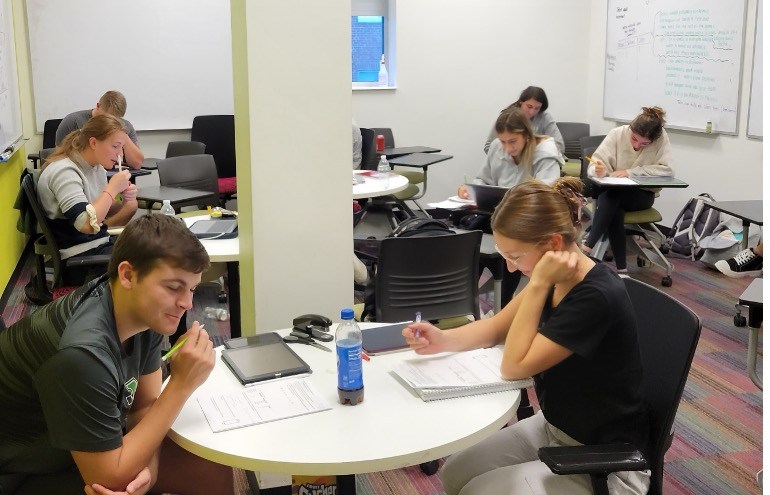
East Hall is also the site for SI sessions for courses that are not directly connected to their home department or program, for example CHM 205, MTH 127 and STA 150. One of these sessions (MTH 127) is small enough to be held in EH 137.
The SI sessions for BSC 120, CHM 205, and STA 150 are held in two of the classrooms in East Hall.
CSS shares East Hall with the Access, Connections and Engagement (ACE) Center; until recently, East Hall was also home to the English Language Institute. The three units worked very well together to serve the students entrusted to our care.