2026
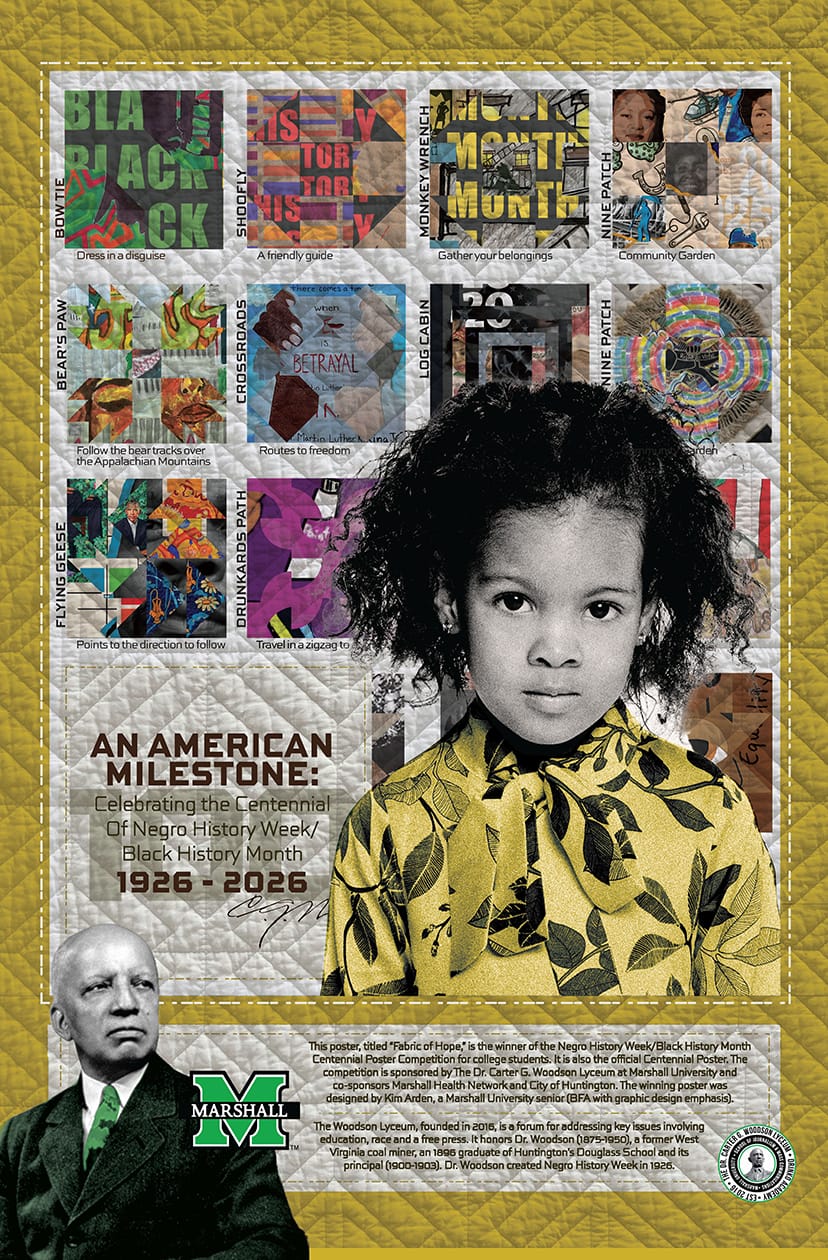
First Place (2026 Official Black History Poster of the Dr. Carter G. Woodson Lyceum)
Kim Arden
Marshall University senior, BFA, Graphic Design emphasis and minor in marketing
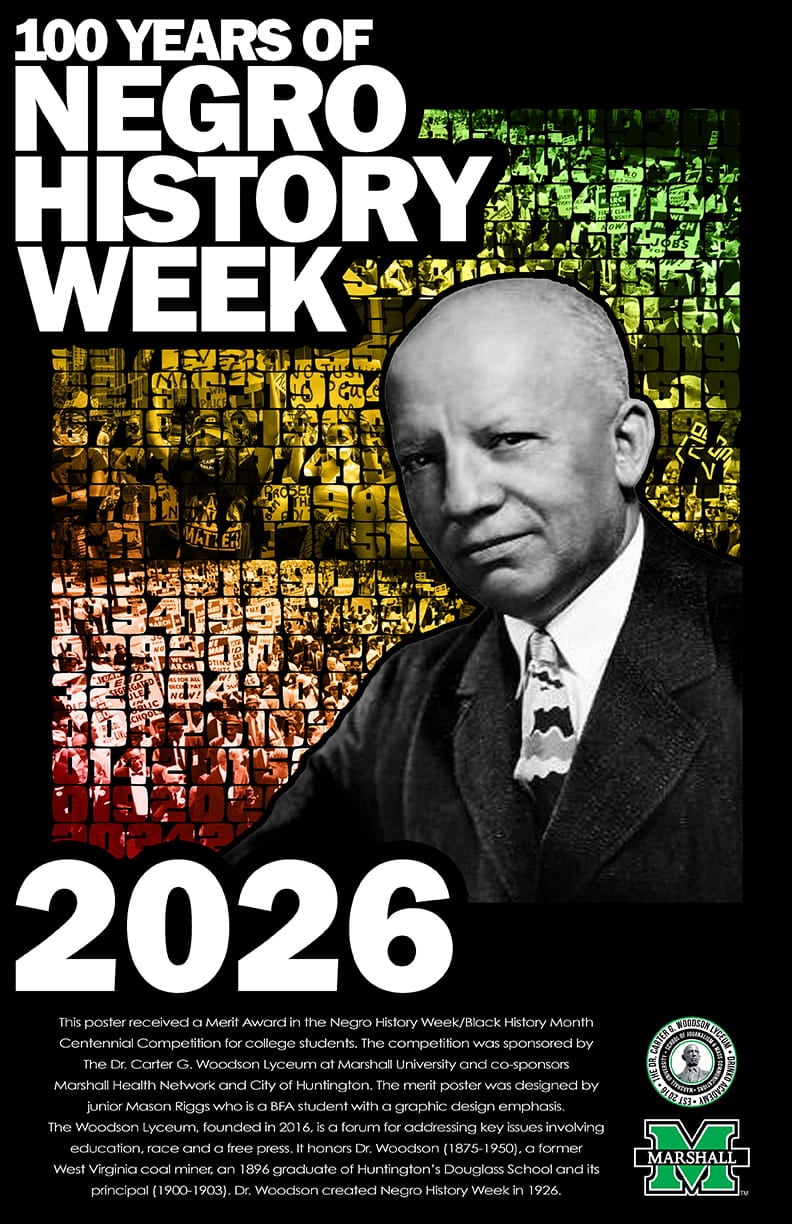
Merit Award
Mason Riggs
Marshall University junior, BFA, Graphic Design
Artists’ Statements
When presented with the opportunity to once again create a poster for Black History Month I was eager to get started. I was intrigued by the Centennial theme and the open-ended subject matter. When researching ideas and narrowing them down the choices, I decided on quilts and began ideation. I decided to incorporate all the past poster winners as a way to honor them and their history. After a conversation with my professor to make sure my idea was feasible, I went for it.
What shape and pattern should the quilt blocks be? I started researching quilt blocks and the meanings behind them. I was also thinking of not only the past but also the future of Black History, and what that could mean to those that view my poster. The quilt blocks would represent the past, so what could I use to represent the future. I used a little girl dressed in yellow, the color of safety and hope, to symbolize the future of Black History Month and possibilities that it holds.
Quilt blocks hold a profound place in African American history. Especially during the era of slavery and the Underground Railroad. Quilting was not only a creative expression but also a means of survival and communication. According to the Smithsonian Center for Folklife and Cultural Heritage, quilt patterns are believed to have served as coded messages to guide enslaved people toward freedom. The patterns that I have included in my design are just a few of those various designs. Bow tie, Shoofly, Monkey Wrench, Nine Patch, Bear’s Paw, Crossroads, Flying Geese, Drunkards Path, Log Cabin, Signature, and the Star have all have their place in my poster design.
1. Bow Tie may signal the need for a disguise or a change of clothing;
2. Shoofly signaled that a home offered help to escaping slaves;
3. Monkey Wrench is believed to be one of the first quilt codes signaling to gather the tools you need to escape;
4. Nine Patch is most commonly used for practicality, and as a basic quilt pattern, it was once a signal for slaves that there was a community garden on property;
5. Bear’s Paw signals a trail or path and is sometimes believed to signify a way through the wilderness or follow the bear tracks through the mountains to water and food;
6. Crossroads can either represent multiply paths or a specific destination with one example being Cleveland, Ohio as a key stop to freedom;
7. Flying Geese was used for direction and migration to point the way for slaves toward freedom;
8. Drunkards Path represents a winding, zigzag path, which could be used to show the need to take an indirect route;
9. Log Cabin symbolizes seek shelter now, and you are safe to speak with the people at this location;
10. Signature Patch is a signature of who made the quilt, or a message written on the quilt usually marked with a year;
11. Star is a signal to follow the North Star to freedom.
These quilts would often hang on the clothesline or the windowsill along the trail that represented the Underground Railroad. Women would gather to sew with their nimble fingers, working in secret, and armed with only a needle and thread. They were engaging in a visual language and doing their part to help slaves find freedom. All while creating a sense of community, an opportunity for storytelling, and cultural preservation. Each stitch carried meaning, linking generations through a shared history. Today these quilt blocks are a celebration of a shared history and future. During Black History Month these are symbols of ingenuity and courage. They remind us that art can be a powerful form of resistance and that creativity often flourishes under oppression. By studying these patterns that are so commonly used today, we honor the resourcefulness of African Americans who turned fabric into a language of liberation.
Work Cited
May 3, 2019 | Marie Claire Bryant | Comments. “Underground Railroad Quilt Codes: What We Know, What We Believe, and What Inspires Us.” Smithsonian Center for Folklife and Cultural Heritage, folklife.si.edu/magazine/underground-railroad-quilt-codes . Accessed 16 Nov. 2025.
The research I did during the creation process was mostly supplementary, as I was fairly confident in my ideas from the beginning. The first thing I learned when making the poster is what the color scheme of red, yellow, green and black represent. Though these colors have certainly been used for posters in the past, I believe they were the best choice to go with. I also learned that some individuals see it as disrespectful to
depict historical figures using unusual colors, which led to a correction being made in my design. The final thing I learned was that the font I was originally using for the header and year, Bauhaus 93, was created by an Austrian designer whose work had appeared in nazi galleries during WWII. I could not find any info on his own political stance, but I changed the font regardless to a non-controversial gothic font.
I decided to use an image of Dr. Carter G. Woodson because he started Black History Month, so he felt like a no-brainer to include. I used that particular image of him for two reasons: 1) It’s a lesser-used photo of him, 2) He is facing to the left of the frame. I wanted him facing the left because that can be used to represent looking back at the past, much like how this year is celebrating the past 100 years of Black history month. Another element that represents the past 100 years is the background, which consists of images of rallies from the Civil Rights and BLM movements that have been framed within tightly packed numbers. These numbers are the digits of every year from 1926 to 2026, and they have been colored red, yellow, and green within a black frame to further represent Black history month.
2025
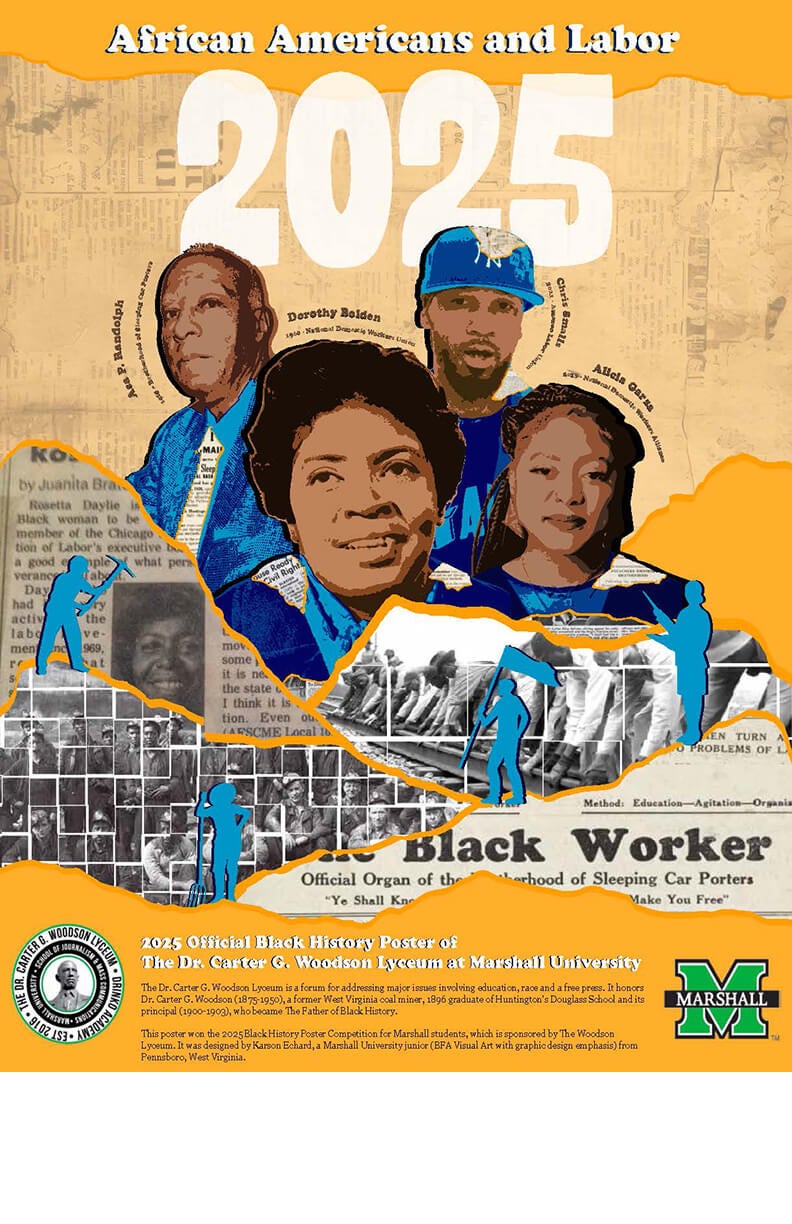
First Place (2025 Official Black History Poster of the Dr. Carter G. Woodson Lyceum)
Karson Echard
Marshall University junior (BFA graphic design, with a minor in marketing) from Pennsboro, West Virginia
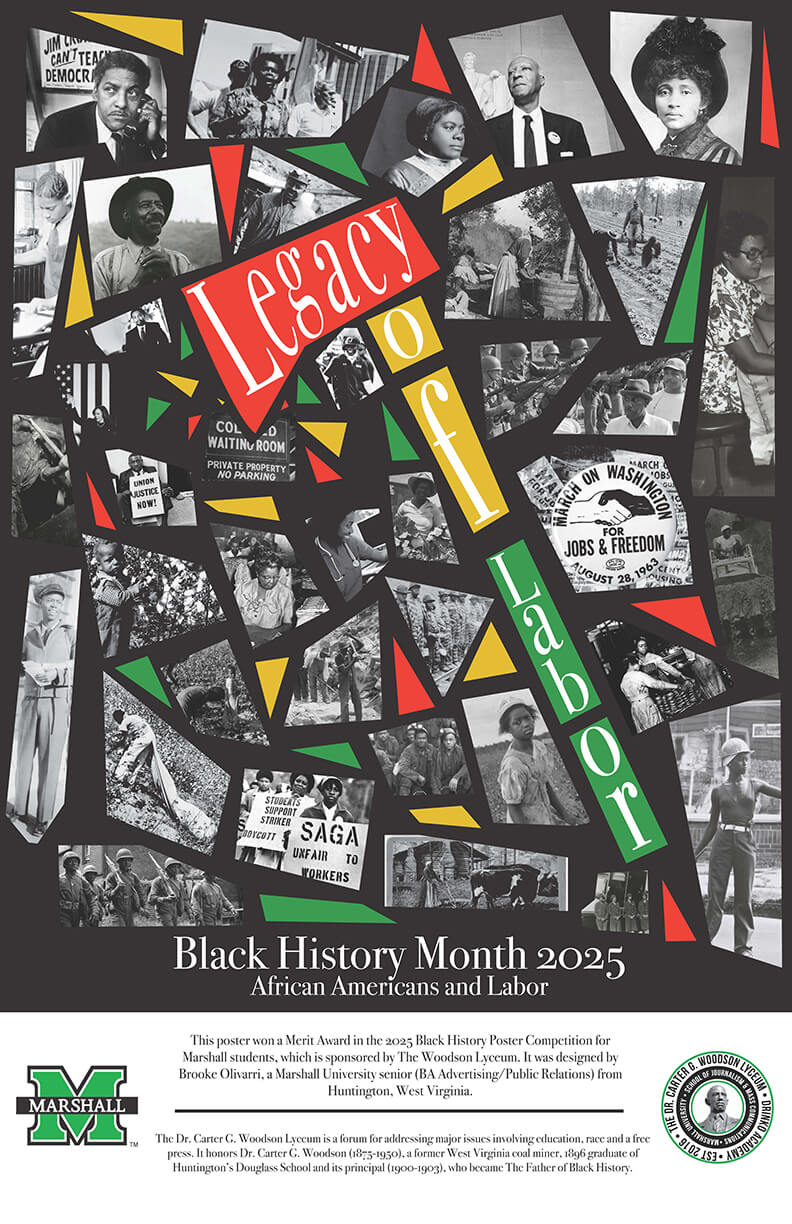
Merit Award
Brooke Olivarri
Marshall University senior (BA Advertising/Public Relations with minors in marketing and journalism and mass communications) from Huntington, West Virginia
2024
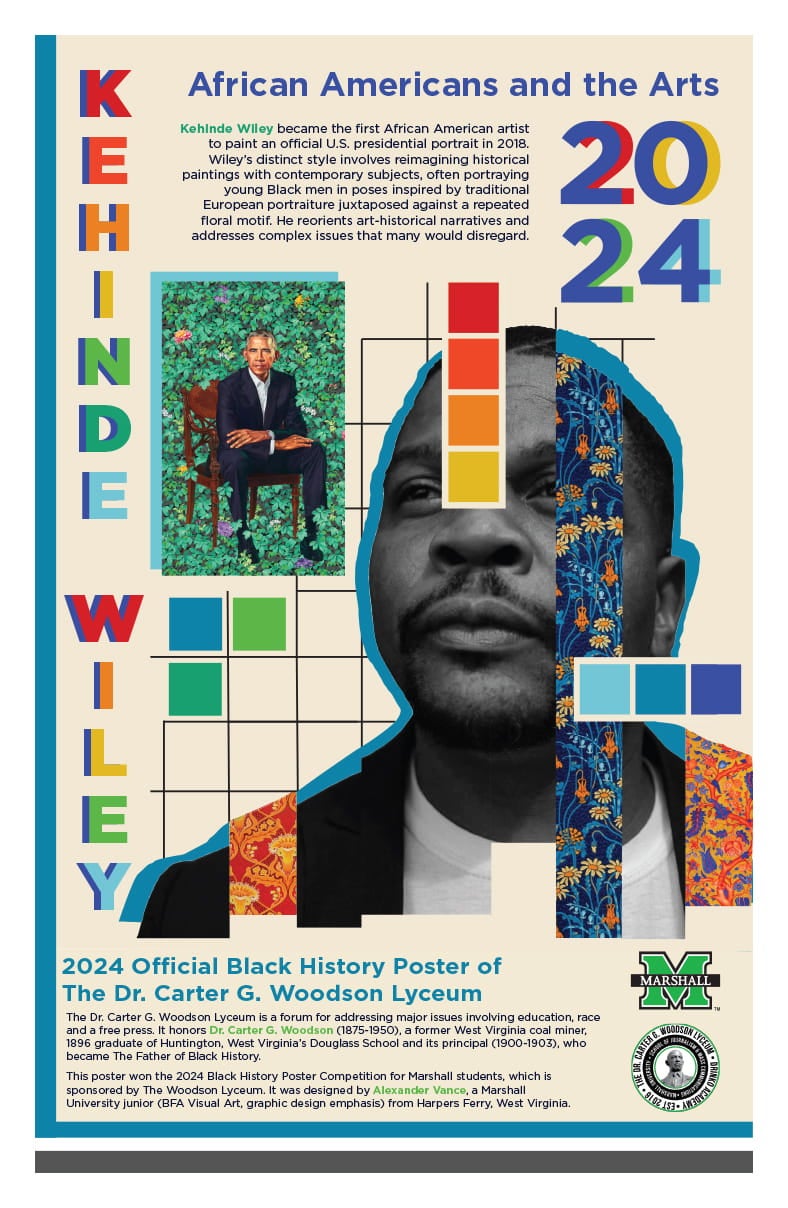
First Place (2024 Official Black History Poster of the Woodson Lyceum)
Alexander Vance, Marshall University junior from Harpers Ferry, West Virginia
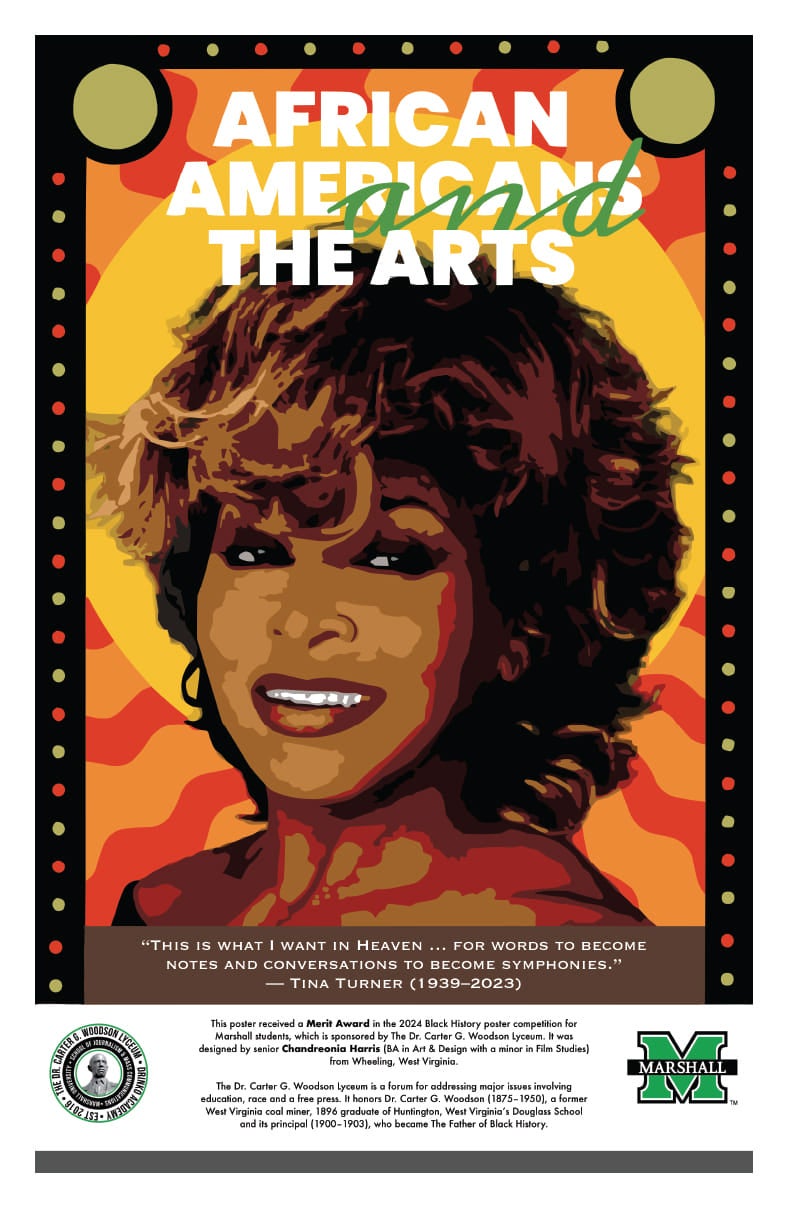
Merit Award
Chandreonia Harris, Marshall University senior from Wheeling, West Virginia
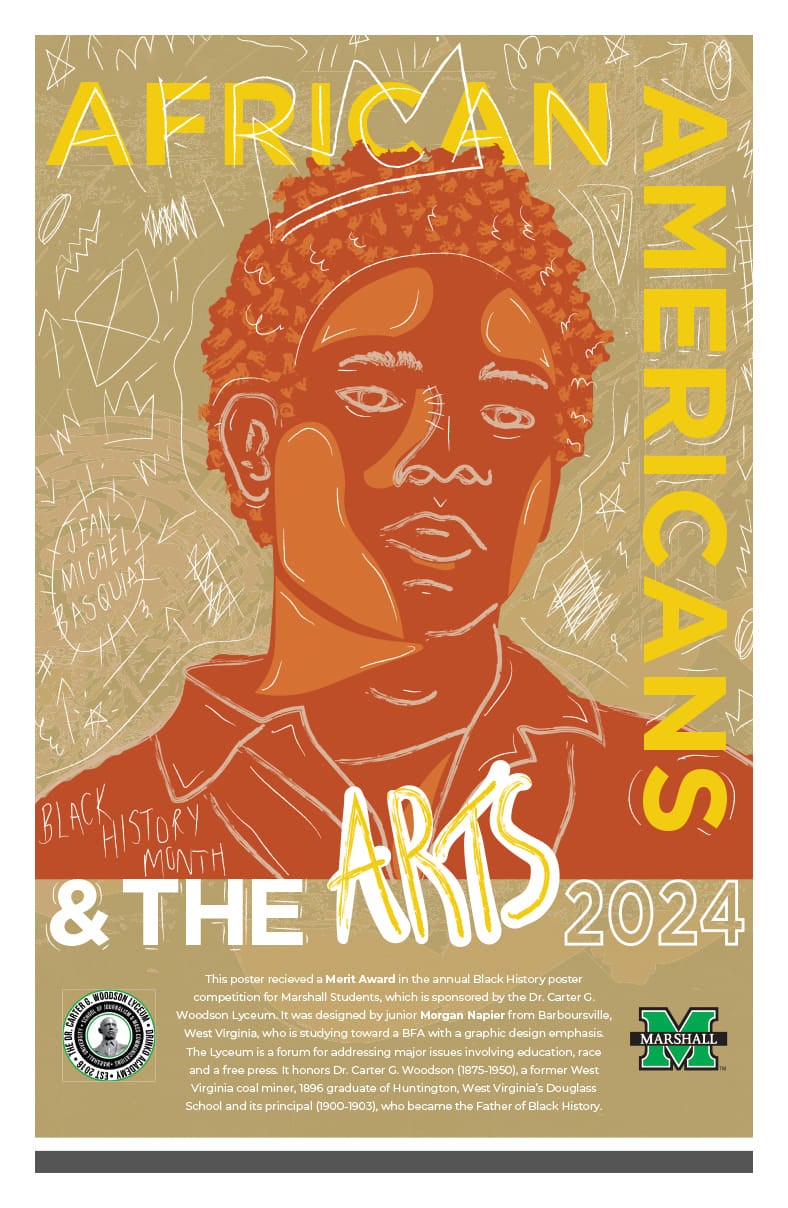
Merit Award
Morgan Napier, Marshall University junior from Barboursville, West Virginia
2023
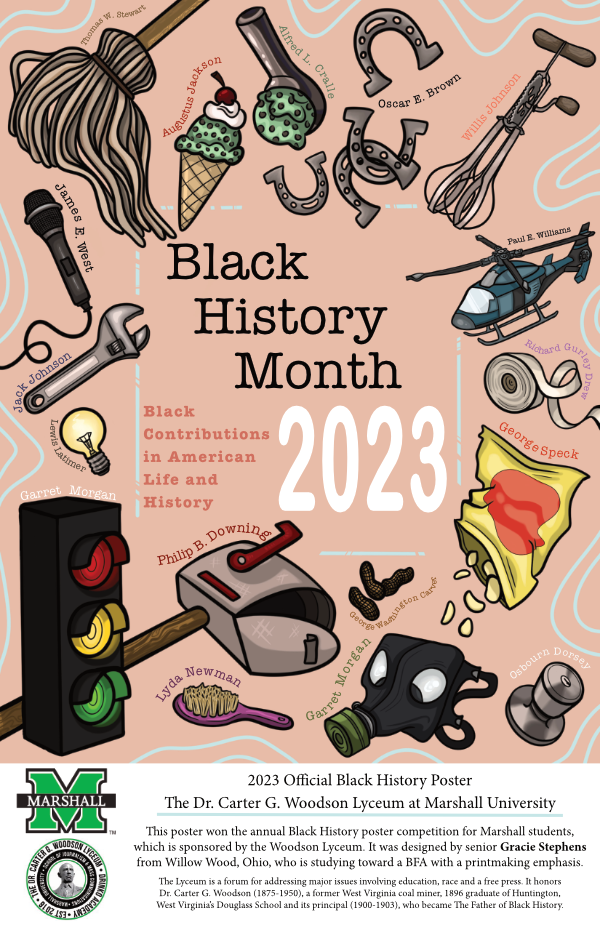
First Place (2023 Official Black History Poster of the Woodson Lyceum)
Gracie Stephens, Marshall University Senior
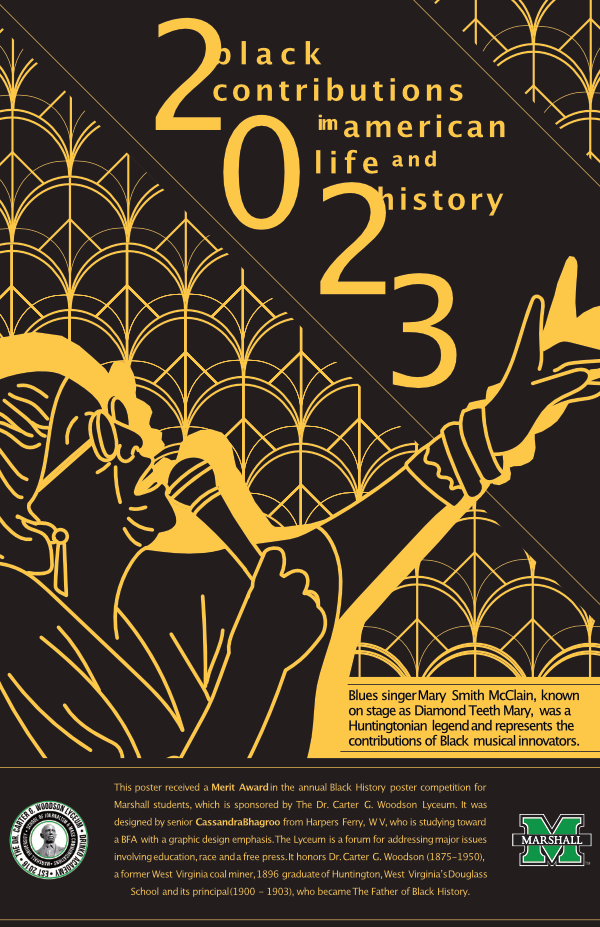
Merit Award
Cassandra Bhagroo, Marshall University Senior
2022
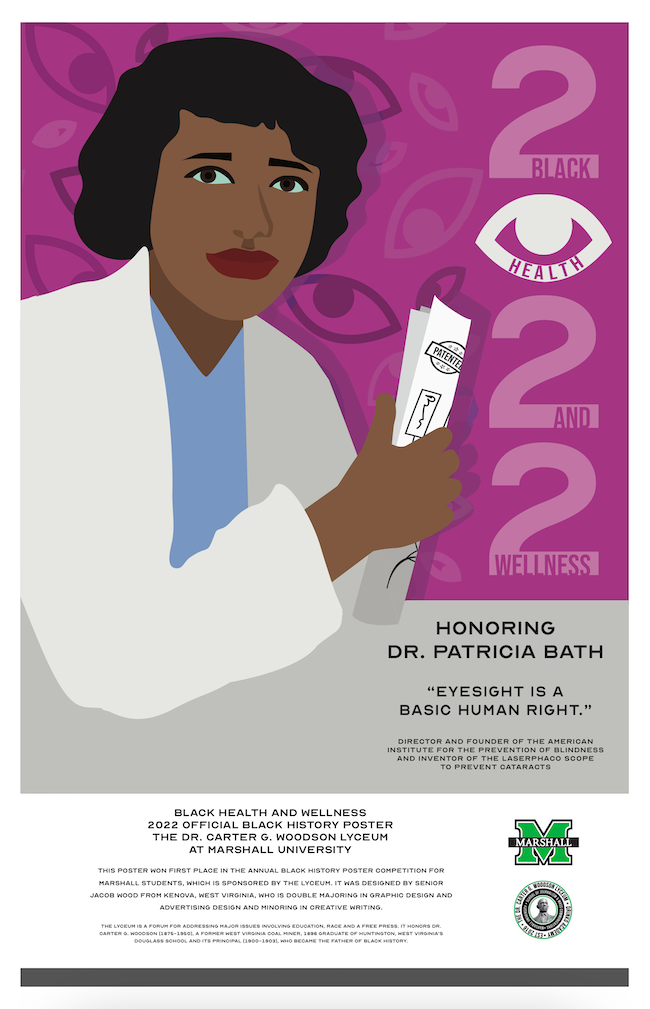
First Place (2022 Official Black History Poster of the Woodson Lyceum)
Jacob Wood, Marshall University senior
The first-place winning poster that became the Official 2022 Black History Month Poster of the Dr. Carter G. Woodson Lyceum was created by Marshall senior Jacob Wood, who is working toward a double major in Advertising/Public Relations and Graphic Design, with a minor in Creative Writing.
“I really wanted to use this poster as a spotlight to shine on an individual who has done a lot of good for the health and wellness community. I began doing research on various African American medical professionals that have contributed to the betterment of society and medical advancements,” Wood said. “There were countless options to choose from! … I cannot stress enough how hard it was to narrow down one individual to focus on. After a lot of pondering, I decided to honor Dr. Patricia Bath (1942-2019). As someone who personally has struggled with vision problems, the works of Dr. Bath hit very close to home. Dr. Bath was the woman who invented the Laserphaco Scope, a critical invention that was essential in the advancement of treatment in cataract surgery. She was a strong advocate for the prevention of sight-related illnesses and conditions.”
Merit Award
- Nicole Carey, a senior who is working toward her B.F.A. in Graphic Design.
- Peyton Dolin, a senior working on a B.F.A. in Sculpture
2021
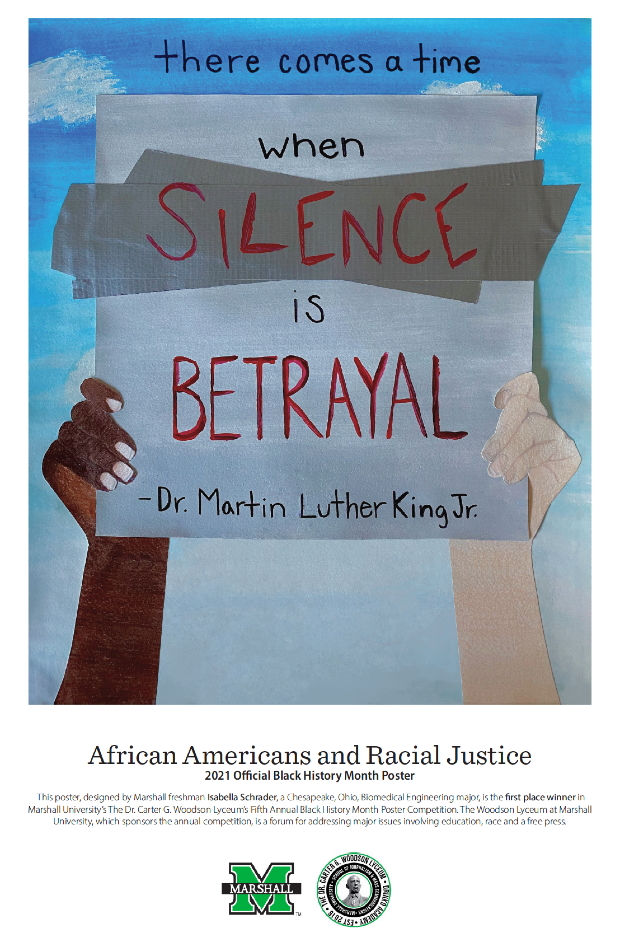
First Place (2021 Official Black History Poster of the Woodson Lyceum)
Isabella Schrader, freshman, Biological Engineering, from Chesapeake, Ohio
“For my poster, I decided to portray two separate individuals, holding up a poster in protest,” Schrader said. “As you can see, the two people are of different races, symbolizing that everyone must work together for any progress to be made regarding racial justice. I used a quote from Dr. Martin Luther King Jr., because his words greatly resonate with the overarching theme of the project, as well as current events surrounding racism. The words also added to the effect of the protest sign, as part of it appears to be directly written on the sign. The tape over silence is meant to show that if people are being silent, they are doing damage and the tape must be removed in order for real change to be accomplished. The sky behind the poster and hands is bright blue and has white, puffy clouds to show that even if a day is ‘calm’ or ‘nice,’ the fight is not over, and we must continue to take action. Overall, I wanted this poster to show that racial justice is essential to a better society, and we will only achieve this goal if people are united.”
Shawna Lockard, freshman, Biology Major, Minor in Chemistry, from Kermit, West Virginia
“No one knows a single right way to go about combatting the systematic institution of racism,” Lockard said. “However, there is a wrong action- no action at all. No matter what you are able to do to assume the role of an antiracist or what resources you have to go about fighting for true equality, the important part is that you do something. You break away from the shackles of indifference and inaction that keeps you bound and raise your fist to join the movement. I’ve learned that if a group of Americans are being mistreated, it is a problem for ALL Americans and demands immediate action. For this poster, I used only acrylic paint and white ink.”
Tyler Hebert, freshman, Civil Engineering with a minor in Chemistry, from Huntington
“As a white individual, I felt it was necessary to focus primarily on African American college students and specifically a female African American Marshall student rather than focusing on ideals that didn’t directly impact Marshall students,” Hebert said. “My model is a freshman student who I met and became close friends with during my first semester at Marshall. Utilizing her in my poster was a way to convey her troubles, experiences, and overall opinions on how to showcase and improve racial justice. My concept is to show that racial injustice is an ongoing issue and will continue to persist no matter what happens, linking directly to the historical quote located in my poster, ‘You can kill a man, but you can’t kill an idea,’ by Medgar Evers. With continual abuse and neglect of African Americans through our country and government, the cause is gaining more traction and attention now due to the exposure of people to the issue. My poster is intended to draw your attention and be impactful in that this fight for racial equality will not be silenced, hitting to the metaphor of the women ripping the tape off her face which has ‘silence’ written on it.”
2020
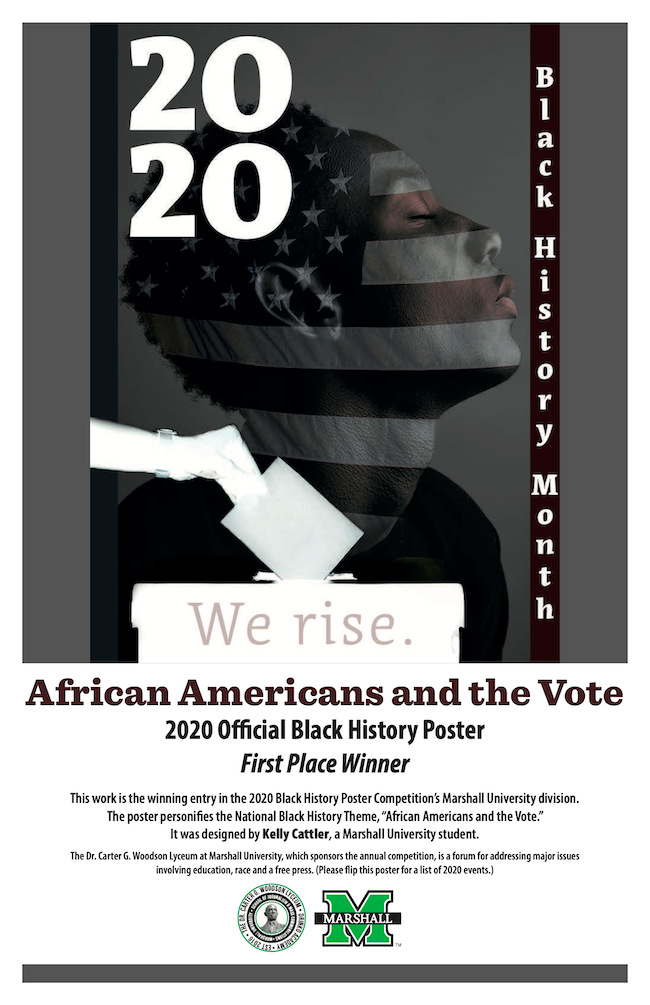
2019
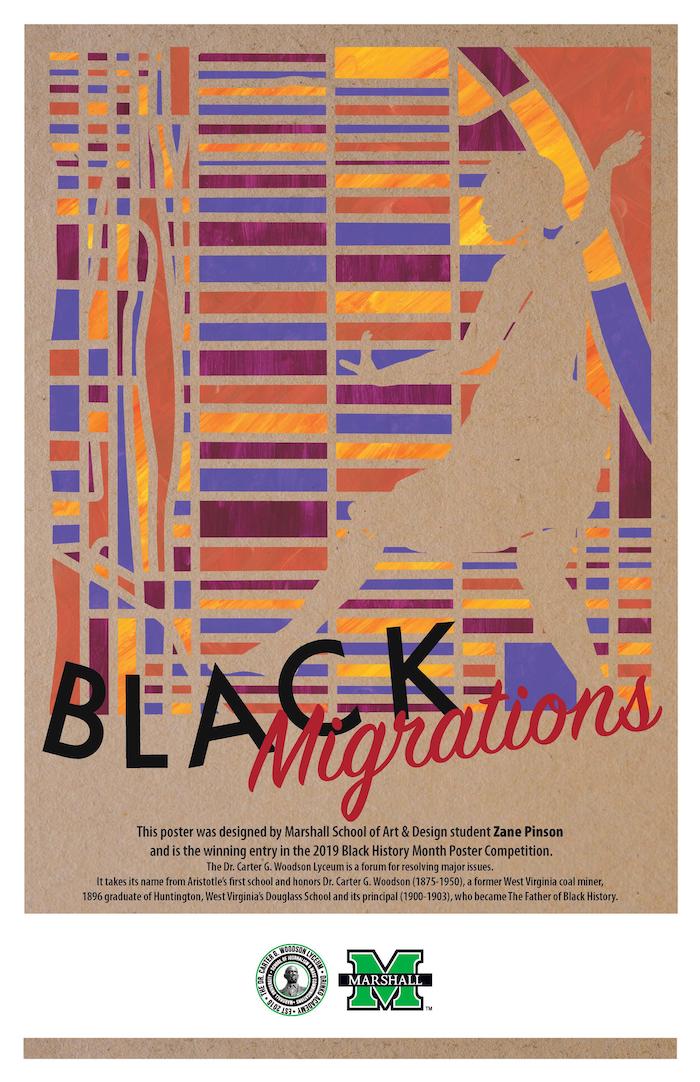
2018
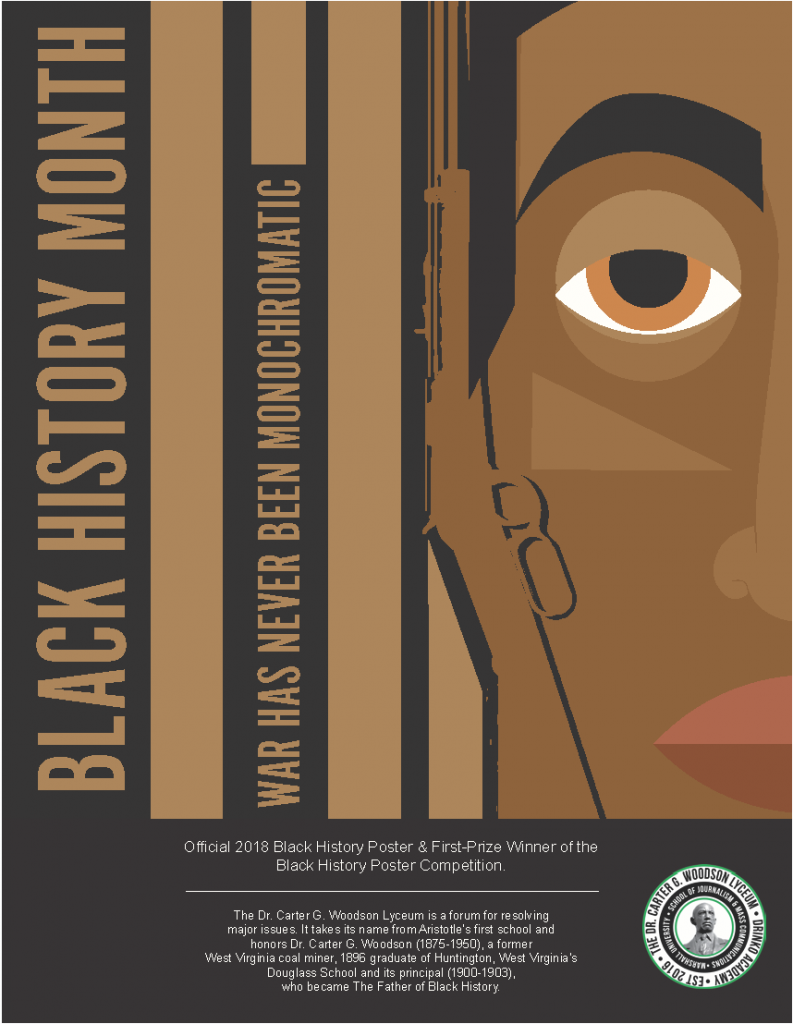
2017
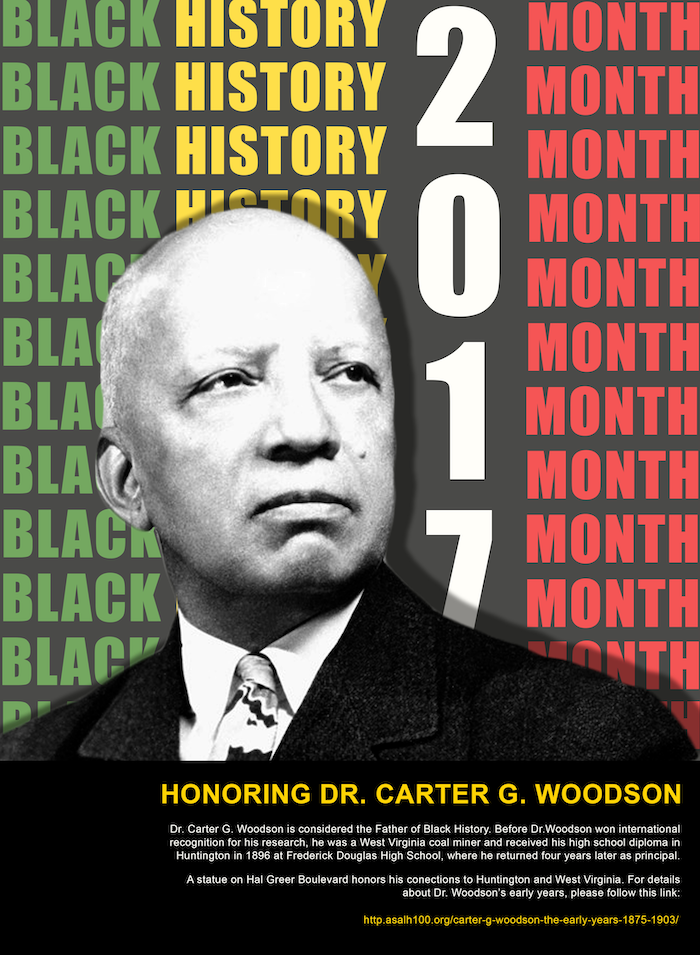
First Place (2017 Official Black History Poster of the Woodson Lyceum)
Emma Bui
Marshall University, international student from Vietnam, majoring in graphic design with a minor in marketing