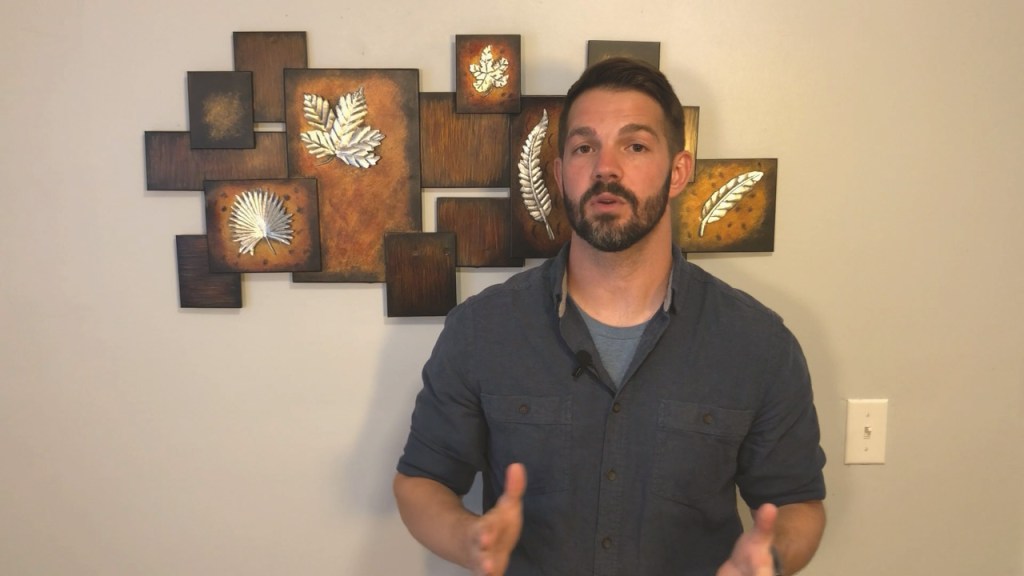
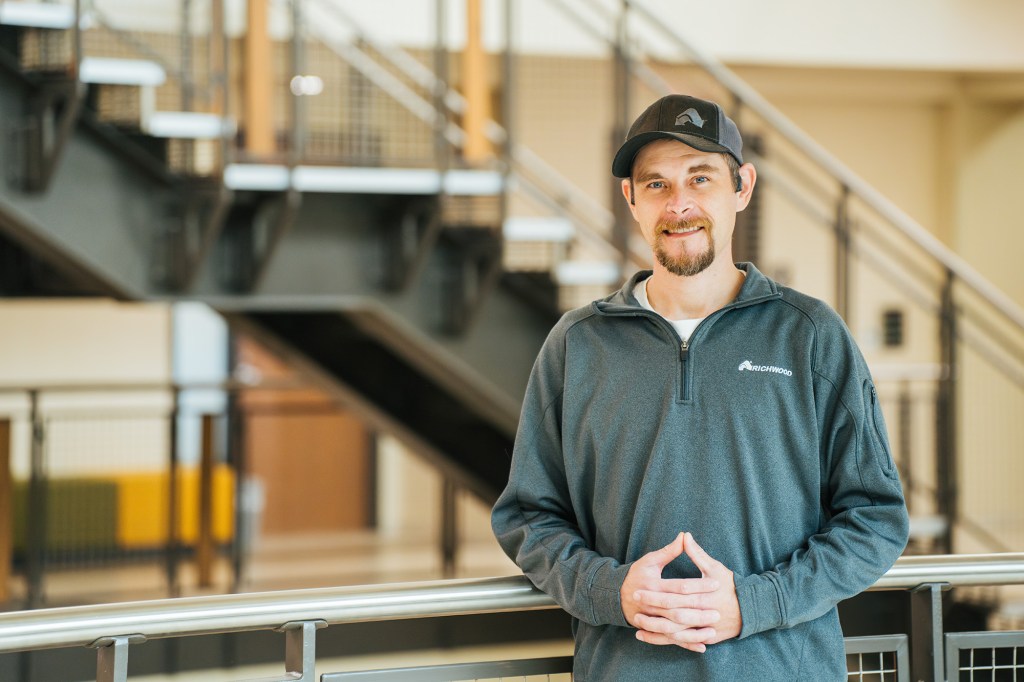
As he learned over the past six years, getting a degree in mechanical engineering when you’re in your 30s with a wife, four children and a full-time job in research and development at a local manufacturer — well, that’s not the easiest route to take.
However, he’s glad he took it, and he’s glad he chose Marshall University to take him on that journey.
“I assumed being a returning student and being older than everybody else was going to be awkward — and it was in the beginning, getting acclimated to everything again — but everybody here has been so inviting and helpful,” said Brandon, who hails from Wayne, West Virginia and graduates from Marshall during same month that his eldest daughter is graduating from high school. “I wouldn’t have wanted to have gone anywhere else. They want you to succeed here. They give you every opportunity to succeed here. It’s hard. They don’t make it easy for you, but if you ask for help, it’s always given. They don’t expect you to do everything on your own.”
The journey to where Brandon is now — he’ll tell you it started in 2006, the year that he said he should have graduated from high school.
“I wasn’t really mature, so I quit high school and started installing carpet,” he said.
He soon decided that wasn’t the path he wanted to take. He got his GED and went on to a job at Richwood Industries, a Huntington-based manufacturer, starting as a laborer at the company’s Eighth Avenue rubber facility, and he’s been with Richwood ever since.
“It’s been a really good company to work for. It’s local and they treat you well,” Brandon said. He also got to know the head of Richwood’s research and development department, Scott Smith, who offered him a chance to join the department if he went back to school and got his degree.
“It’s not very often you get a second chance, so it was nice,” Brandon said.
Turns out, mechanical engineering has always been something he’s been drawn to. He just didn’t realize it.
“I had never been exposed to engineering,” he said. “I’d always enjoyed working on mechanical things, figuring out what makes something work and fixing it. Once I was really exposed to it, especially the research and development part of it, it interested me. You’re just breaking things and testing things.”
Going to college about 15 years after high school — it was a shock. “I had to relearn how to learn,” he said.
“Everybody experiences some doubt. If the goal is big enough, you’re going to experience doubt along the journey,” he added. “I had no doubt about what I wanted to do — it was a doubt about capability. I endured and pushed through, and it happened.”
His biggest challenge: math classes.
“I’m not a math person at all,” Brandon admitted. “With math, I just beat my head and then one day, it just clicked. … I struggled with Calculus, and I struggled with Calculus II, and then I got took Calc III and Differential Equations, it was like the lightbulb went on. Everything just made sense.

“The professors will tell you this: It’s about your brain learning how to look at problems in different ways. They test that limit here. They give you some advanced problems, and you just learn not to pigeonhole yourself into looking at a problem from just one particular angle. It’s just a toolbox. That’s all it is.”
Brandon’s dedication to his education has been impressive to faculty in the Weisberg Department of Mechanical and Industrial Engineering.
“Brandon’s journey has been anything but ordinary,” said Dr. Asad Salem, Marshall’s J.H. Fletcher Professor of Mechanical Engineering. “While pursuing a rigorous engineering degree, he has been working full-time in a local industry, all while supporting his family, his wife, and his children. Balancing these responsibilities alongside the demands of an engineering program requires extraordinary discipline, sacrifice, and perseverance.
“As his academic advisor, I have had the privilege of working closely with Brandon and witnessing firsthand the compelling challenges and hardships he has overcome throughout this journey. His perseverance, character, and quiet determination truly set him apart.”
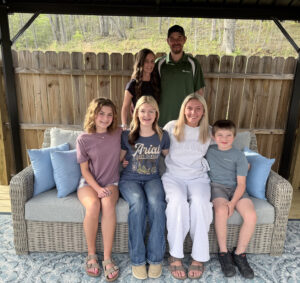
Brandon said much of the credit goes to his family, especially his wife, Sarah, for taking on so many responsibilities at home so he could pursue his degree.
“She’s carried most of the load,” he said.
He’s also extremely proud of his children, Madilynn, 18; McKenzie, 17; Paislea, 12; and Michael, 9. Madilynn is graduating from high school as he graduates from Marshall, and he’s excited that she’s transitioning right into college with plans to study law.
“I don’t look at what I’ve done as any big success. I look at it as being given a second chance,” he said. “I don’t feel like I’ve done anything special – I want the kids to go to college after they graduate high school, you know? I don’t want them to wait until they’re almost 40 because it’s tremendously hard.”
Hard, like getting up at 3:30 in the morning to get some schoolwork done before his day job got going. Hard, like getting everything done for his job while also taking classes and meeting the challenges required for earning that degree in mechanical engineering.
Hard, but worth it. While college has been difficult, he’s enjoyed the work, which correlates with what he does at Richwood.
“The company I work for, what we specialize in is bulk material handling, like conveyor belts — anything that is transported via conveyor belt,” Brandon said. “One of things we do in research and development is basically add custom chemical packages to help accomplish a certain abrasion resistance.”
As part of his capstone project at Marshall, Brandon helped create a hydraulic press to vulcanize rubber by putting it under high pressure and heating it to a constant temperature of around 300 to 310 degrees.
He plans to stay at Richwood in research and development.
“I’m ready to focus on my career and my family. It’s been a blessing, having an employer that works with me and has enabled me to go back to school,” he said.
His best advice is to, “Jump in. As Nike says, just do it. You can contemplate until the end of time,” Brandon said. “I didn’t want fear of failure to be a reason for not doing it. I told myself to think of it as: I wanted to be challenged, and there has been plenty of challenges, so that was achieved. I wanted to know where my failure point was. I didn’t want to look back and say I wish I would have. I wanted to know.”