
Have you ever wondered what it’s like to dedicate years, decades even, to a single pursuit?
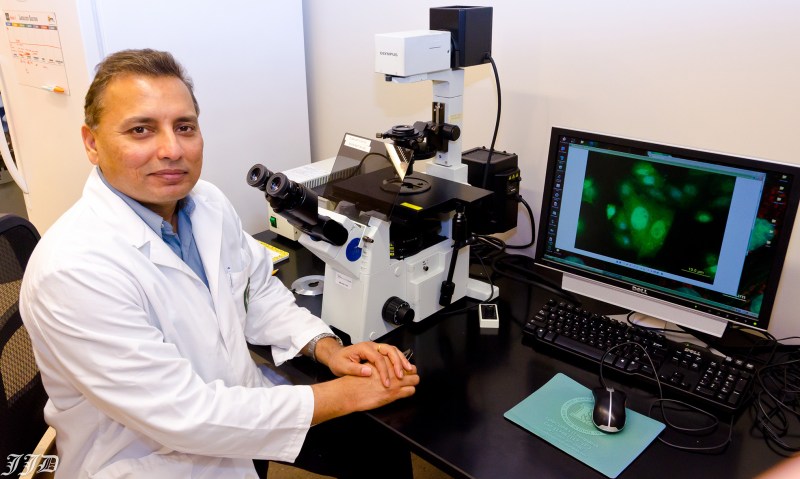
Well, one Marshall University researcher knows just what that feels like because he’s spent more than 20 years relentlessly advancing the same project in a laboratory in Huntington, W.Va.
Dr. Jagan Valluri, professor of biological sciences and co-inventor of ChemoID®, an optimization tool that tests and personalizes chemotherapy individually to the patient, was candid when asked what motivates him to return to the same project day after day, month after month, and year after year.
“Several years ago, ChemoID was used to prolong the life of a 19-year-old from Pennsylvania who was diagnosed with glioblastoma, a particularly lethal form of brain cancer,” Valluri said. “The personalization of chemotherapy through this tool extended his life by five years. It’s those stories about people being helped that keep me coming back to the lab every day.”
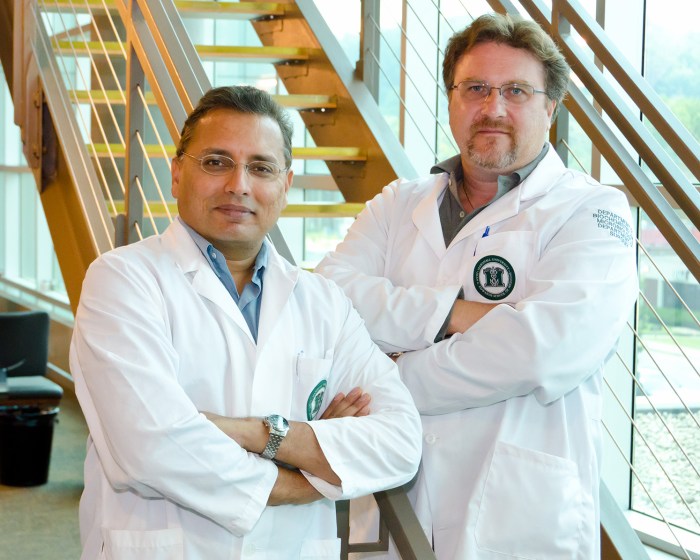
Marshall University holds the patents underlying the ChemoID test platform, the scientific discovery by Valluri and Dr. Pier Paolo Claudio, a former faculty member at Marshall’s Joan C. Edwards School of Medicine.
The ChemoID test development serves as a prime example of translational cancer research. More than 20 years ago, the two met over coffee after a chance discussion that occurred on the pedestrian bridge connecting the College of Science and Robert C. Byrd Biotechnology Science Center, setting the stage for future research together. For years, the duo worked through the steps of bench-to-bedside research, from the meticulous basic science lab models into clinical trials and finally to regulatory submission to the U.S. Food and Drug Administration (FDA).
When patients have months to live, every month, every week, every day is extremely important. And so, our test allows oncologists to dial the right treatment for that person.
— Dr. Jagan Valluri
ChemoID clinical utility has been demonstrated through multi-institutional trials involving major cancer centers like the University of Cincinnati, Allegheny Health Network, Tampa General Hospital, Miami Cancer Institute, Louisiana State University Medical Center, Penn State Cancer Institute, Thomas Jefferson Cancer Center and the Edwards Comprehensive Cancer Center at Marshall Health Network.
Valluri, in an earlier interview with one of those clinical partners, explained that if the anti-cancer therapy that targets cancer stem cells is incorporated earlier in the treatment plan, ineffective treatments will be eliminated, and patients will be able to receive the maximum therapeutic benefit.
If you consider the number of cancer patients ChemoID can help, it represents a substantial population for whom standard-of-care treatments have failed and where ChemoID can identify new, actionable therapeutic options. Initially, the test platform was targeted for certain types of brain and ovarian cancers but is expanding to other types of as well.
— Dr. Jagan Valluri
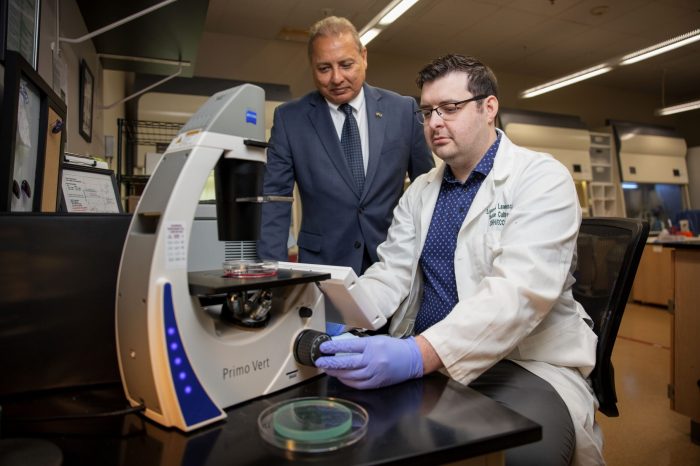
Early in the research, during the preclinical stages, Marshall graduate and doctoral students were engaged in the investigational process as well. One of those students, Logan Lawrence, has come full circle with ChemoID — first as an undergraduate, then completing Medical Laboratory Science (MLS) training, and now serving as a pathology assistant and department research coordinator at the Edwards Cancer Institute, where ChemoID results are processed.
ChemoID just recently received another nod of approval from the FDA, being designated as an FDA Breakthrough Device. Such a distinction provides a fast-track aimed at expediting the development and approval of life-saving cancer technologies. That recognition was announced in April and celebrated by Marshall’s Board of Governors.
Patients interested in whether ChemoID is an option for them may obtain more information by clicking here.
The FDA Breakthrough Device designation for ChemoID is a major accomplishment for Dr. Valluri and Dr. Claudio. This achievement reflects Marshall University’s long-standing commitment to translating scientific discovery into meaningful advances in patient care.
— Dr. Robert Bookwalter, provost and senior vice president for Academic Affairs

More Moments
 Moments
From Marshall University to San Antonio: A Bell Honors Navy Veterans
October 21, 2026
Read Story
Moments
From Marshall University to San Antonio: A Bell Honors Navy Veterans
October 21, 2026
Read Story
 Moments
A Head Start Without Debt
October 13, 2026
Read Payton's Story
Moments
A Head Start Without Debt
October 13, 2026
Read Payton's Story
 Moments
Prepared for Anything
October 5, 2026
Read Nathan's Story
Moments
Prepared for Anything
October 5, 2026
Read Nathan's Story
 Moments
A helpful hobby turned into a successful career
September 29, 2026
Read Corey's Story
Moments
A helpful hobby turned into a successful career
September 29, 2026
Read Corey's Story
 Moments
Advancing AI at Marshall
September 15, 2026
Read Dr. Wiley's Story
Moments
Advancing AI at Marshall
September 15, 2026
Read Dr. Wiley's Story