Marshall Skills Exchange
Impact at a Glance

ASN
Marshall Online launched Inclusive Advising for a Neurodiverse Campus, a self-paced professional-development microcredential for advisors, developed with funding secured through the Advising Success Network (ASN) Pitch Competition(opens in new window). The award powered a national, cross-institutional collaboration — uniting advisors and student-support experts from Indiana University–Bloomington, Marquette University, the University of Nebraska at Omaha and the University of South Carolina–Columbia, many of whom identify as neurodivergent themselves. Highlighting Marshall’s leadership in inclusive, human-centered design, the course is offered free nationwide through the Marshall Skills Exchange, extending our reach beyond campus and advancing ASN’s mission of evidence-based, equitable advising.
A Microcredential for the Week of Welcome
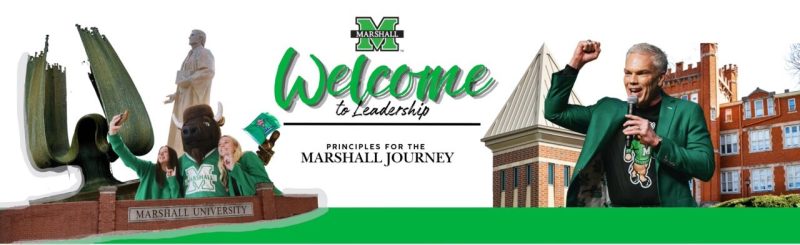
As part of President Brad D. Smith’s WoW presentation, the Marshall Skills Exchange launched a companion microcredential course introducing students to the principles of leadership. This first version, designed for incoming freshmen, emphasized practical skills for conflict resolution, resilience, and navigating challenges as new members of the Marshall community. Building on this foundation, the next iteration will feature video segments from President Smith himself and expand its reach to a broader community audience, equipping learners with adaptable leadership strategies that foster growth, collaboration, and persistence in the face of change. 690 badges were issued.
Digital Identity Microcredentials
Marshall Online developed Mastering Your Digital Identity, a self-paced microcredential that helps professionals and everyday digital citizens protect and manage their identities online. Shaped during a collaborative planning session at Marshall’s iCenter and filmed with regional and national experts — from Vantage Ventures, YOTI, ID.me, TechConnect West Virginia, Rank One Computing and Marshall’s Institute for Cyber Security — the course covers multi-factor authentication, biometrics, blockchain identity and real-world breach analysis. It was funded through a grant from the Marshall University Research Corporation in partnership with the West Virginia Digital Identity Tech Hub.
Connecting Campus, Community & Beyond

Credential WV
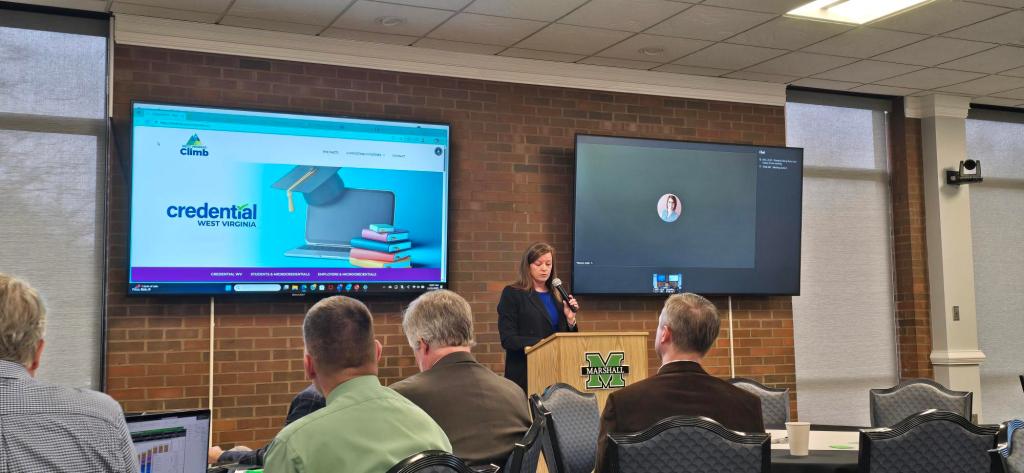
Marshall partnered with HEPC to present our third statewide convening focused on microcredential expansion, Credential WV Summit held in Charleston, October 8-10. Presenters and facilitators included several of our universities, colleges, and state agencies and our national sponsors and guests from Lumina Foundation, Strada Education Foundation, Education Design Lab, AACRAO, Coursera, and Accredible. West Virginia is now considered a national leader in this space due to our consistent collaboration.

Centennial
As part of the Negro History Week/Black History Month Centennial (1926–2026) — “Celebrating an American Milestone” — the Marshall Skills Exchange delivered an Online Black History Courses Program of entry-level, non-credit microcredentials, offered by Marshall University with co-sponsors the City of Huntington and Marshall Health Network. Spring 2026 saw 270 enrollments across 31 courses, contributing to 376 unique enrollments over the full Centennial Celebration and bringing this history to local and global learners alike.
Expanded Coursera Partnership
Marshall Online expanded access to Coursera’s Career Academy, providing students, faculty and staff with access to industry‑aligned courses. Continued promotion of the platform led to significant growth in engagement, with demand for licenses increasing and learners using Coursera to supplement academic programs, build workforce‑ready skills and gain Adobe certifications. Adoption has been strong, Marshall is now utilizing 87% of its Career Academy licenses across campus. The partnership is also entering a new phase: Marshall has begun authoring and publishing its own courses on the Coursera platform, starting with President Brad D. Smith’s Principles of Leadership.
LER Accelerator: Empathy Interview Insights
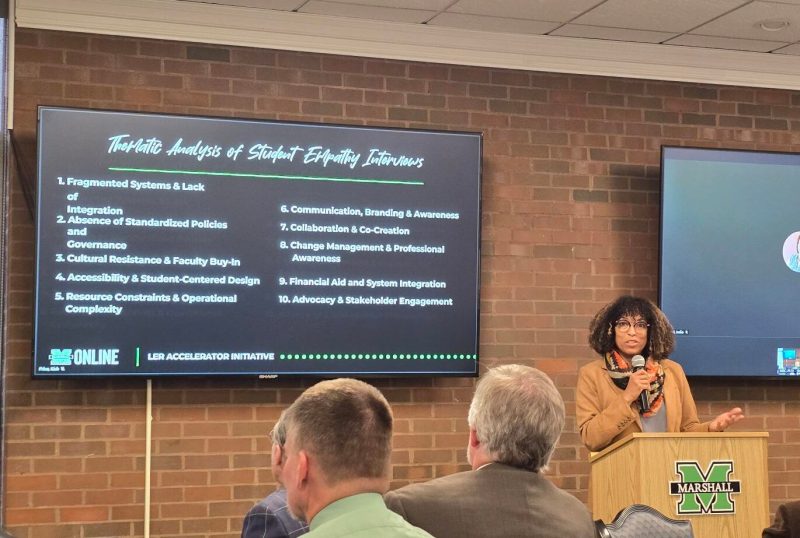
As part of its LER Accelerator project — a strategic initiative to weave microcredentials and credit for prior learning (CPL) into flexible, stackable degree pathways — Marshall’s LER Leadership Team took a human-centered approach to understanding learner and stakeholder needs. The team conducted 20 in-depth empathy interviews, logged more than 10 hours of focused discussion, and analyzed 317 pages of transcripts to surface 14 key themes, from expanding accessibility and building stackable pathways to strengthening workforce readiness. Grounded in the university’s “Marshall For All, Marshall Forever” vision, these insights are guiding the design of inclusive, learner-centered credential options.
Behind the Scenes




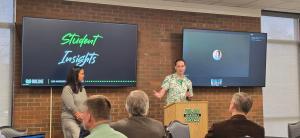

Synthesia — AI Video Generation:
Marshall Online uses Synthesia’s AI video generation platform to produce micro-lectures and course videos at scale. The tool brings professional multimedia into online courses quickly and affordably, enriching the learning experience and keeping students engaged. Here is a example of a video produced with Synthesia!
FASTER WV Entrepreneurship Courses
Marshall Online partnered with Advantage Valley’s FASTER WV Entrepreneurship Program — led by Director of Entrepreneurial Development Bryan Shaw — to bring a flexible, affordable entrepreneurial learning path to the Marshall Skills Exchange. The FASTER WV path features 12 stackable courses that guide aspiring founders and small business owners from idea to launch, delivered on-demand so learners can build real-world skills and confidence at their own pace. To spread the word, Marshall Online worked with University Communications on a social media marketing campaign supporting the rollout.
WV CALM
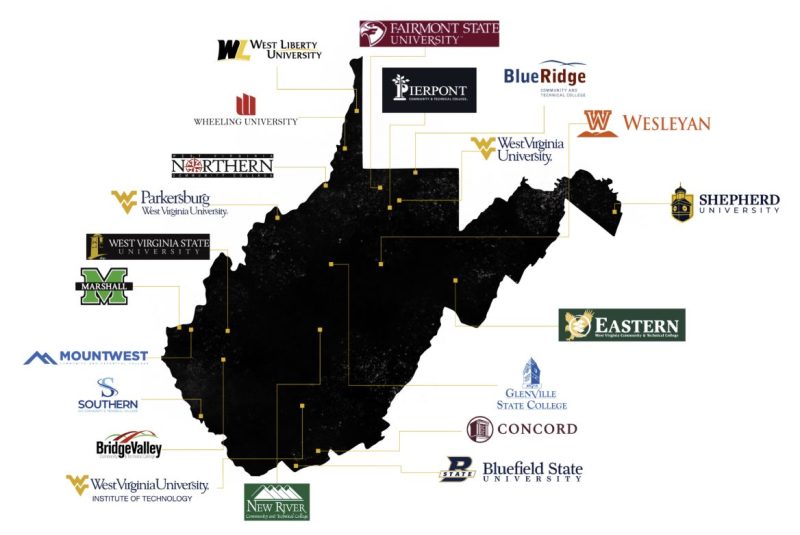
Marshall is helping shape WV CALM, a statewide learning mobility initiative building a coordinated network for West Virginia. Julia Spears, Michelle Morrison and Hilary Gibson serve as workgroup members, collaborating with representatives from every two- and four-year institution in the state. Across three workgroups, partners are creating a data-analysis landscape for each institution, streamlining Credit for Prior Learning (CPL) and Prior Learning Assessment (PLA) processes statewide, and building essential-skills frameworks and stackable pathways that connect microcredentials to associate and bachelor’s degrees.
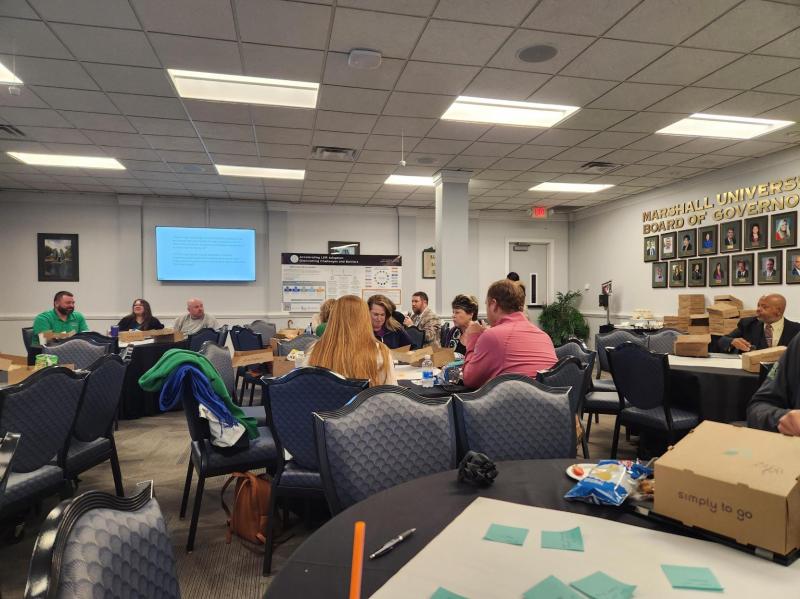
Building the Systems Behind the Skills Exchange
New Student Information System: Working with Marshall IT (MUIT) and ERx, Marshall Online built a new student information system for the Marshall Skills Exchange. Salesforce-based workflows streamline how microcredentials are initiated, developed and launched — automating many manual steps and adding tracking dashboards that monitor development progress and post-launch registrations.
Partner-Facing Dashboards: In partnership with MUIT and Institutional Research (IR), Marshall Online is developing shareable dashboards that let external partners monitor their students’ progress and microcredential development in their fields. Coalfield Development and MAMC are serving as the first prototype partners.