
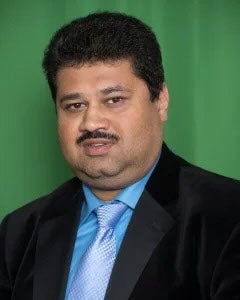
Biography
Clinical Expertise:
Cardiovascular and Pulmonary Physical Therapy & Medically-complex Acute Care & Management of individuals with acute healthcare needs
Certification: APTA Board Certification: Cardiovascular & Pulmonary Certified Specialist
Research/Scholarly Interests:
- Knowledge translation and integration to inform the practice of acute care physical therapy.
- Innovative practice models of physical therapy as a hospitalist service
- Diagnostics and triage of the medically complex patient
- Controlling healthcare costs by implementing outcomes & evidence in clinical acute care practice.
I am, first and foremost, a physical therapist. My teaching grows from clinical practice and from a conviction that the purpose of professional education is not simply to transmit knowledge, but to develop clinicians who can use knowledge intelligently when the patient in front of them does not resemble the example in a textbook.
I prepare Doctors of Physical Therapy for a profession in which autonomy carries responsibility. Physical therapists must be able to recognize what they know, identify what they do not know, distinguish movement dysfunction from the physiologic processes driving it, and determine when intervention is appropriate, when it must be modified, and when another professional or level of care is needed. My goal is therefore not merely to teach students what is known today. It is to develop clinicians capable of reasoning through what they will encounter tomorrow.
Integration Before Isolation
Human physiology does not respect the boundaries of courses, organ systems, or professional specialties. Neither does disease. A patient’s mobility may be influenced simultaneously by cardiovascular reserve, pulmonary gas exchange, hematologic abnormalities, renal function, medications, inflammation, pain, cognition, nutrition, and social circumstance. The observable movement problem may be important, but it may not be the diagnosis and it may not be the principal problem.
This principle forms the intellectual foundation of my teaching. I teach physiology, pathology, pharmacology, and clinical medicine not as collections of facts to be memorized, but as interconnected sciences that explain why patients present as they do. Laboratory values, medications, imaging findings, vital signs, symptoms, and medical diagnoses become meaningful when students learn to connect them to underlying physiology and then ask the essential clinical question: What does this mean for this patient, at this moment, and for what I am about to do?
My background in acute care has made this integration particularly important to me. The medically complex patient exposes the limitations of compartmentalized thinking. Successful practice requires the clinician to synthesize information across body systems, recognize patterns and contradictions, estimate physiologic reserve and risk, and continually revise clinical decisions as new information emerges. I want students to become comfortable with that complexity rather than retreat from it.
From Knowledge to Clinical Reasoning
Foundational science matters deeply, but knowledge alone is not the endpoint of professional education. Students must learn to retrieve, connect, challenge, and apply what they know.
For that reason, case-based learning and guided questioning are central to my pedagogy. A case creates a reason to know. Previously isolated concepts in physiology, pathology, pharmacology, laboratory medicine, and rehabilitation begin to converge around a human problem. I frequently ask students to commit to an interpretation or decision, explain the reasoning behind it, encounter additional information, and then reconsider their position. Being wrong during that process is not failure; being unable or unwilling to examine why one was wrong is a lost opportunity to learn.
My role in this process is not to remove difficulty from learning. It is to make the difficulty productive. I scaffold complex material so that students first acquire an appropriate conceptual framework, then apply it repeatedly under increasingly realistic conditions. Retrieval, formative assessment, clinical cases, discussion, and feedback allow students to identify gaps while those gaps can still be corrected. As competence develops, I progressively shift responsibility from instructor explanation toward learner interpretation and independent clinical judgment.
Evidence, Curiosity, and Intellectual Independence
I expect students to question what they are taught, including what I teach them.
Professional knowledge changes. Evidence evolves. Guidelines are revised. Long-standing clinical practices sometimes survive long after their scientific foundations have weakened. An autonomous clinician therefore cannot depend indefinitely on the authority of a professor, textbook, algorithm, or tradition. Increasingly, the same must be said of information produced by digital tools and artificial intelligence.
I want students to develop disciplined skepticism: to ask where a claim came from, whether the evidence supports it, whether it applies to the patient under consideration, and what information might change their conclusion. I have an obligation to make my teaching as scientifically defensible and current as possible; students have a corresponding obligation to interrogate information before incorporating it into their own clinical reasoning.
The objective is not skepticism for its own sake. It is intellectual independence.
Teaching the Professional, Not Merely the Student
The doctorate signifies more than successful completion of a curriculum. It carries expectations of judgment, accountability, ethical conduct, communication, humility, and service to patients and society.
I therefore view professional formation as inseparable from academic learning. Students should leave physical therapy education capable not only of performing examinations and interventions, but of recognizing medical complexity, communicating uncertainty, defending their decisions, collaborating across professions, and understanding the limits of their own competence. They should know when to act independently and when the most sophisticated clinical decision is to stop, reconsider, consult, or refer.
These qualities cannot be taught entirely through lecture. They must also be modeled. Students observe how faculty respond to uncertainty, disagreement, new evidence, mistakes, and competing responsibilities. I consider my continuing engagement in clinical practice important for this reason. Teaching keeps me accountable to the science; practice keeps my teaching accountable to reality.
A Reciprocal Responsibility
Teaching and learning are reciprocal endeavors, but their responsibilities are not identical. I owe students clarity, preparation, intellectual rigor, meaningful learning experiences, timely feedback, fairness, and respect. I owe them an environment in which questions are welcomed and difficult ideas can be examined without fear of embarrassment.
In return, I expect students to participate actively in their own development. Professional education requires effort, curiosity, preparation, reflection, and the willingness to struggle with uncertainty. My responsibility is not to guarantee that learning is easy; it is to ensure that the work I ask students to undertake has purpose and that I provide them a reasonable pathway toward mastery.
Ultimately, I do not measure successful teaching by how much information I can present or by how closely students reproduce my reasoning. I measure it by the degree to which they eventually no longer need it.
The most satisfying moment in teaching occurs when a student begins connecting information independently: when a laboratory abnormality is no longer simply a number, a medication no longer simply a name, a diagnosis no longer simply a label, and a movement impairment no longer simply something to treat. The student begins to see the patient as an integrated physiologic and human system and can reason toward a defensible course of action.
That is the clinician I seek to develop: scientifically grounded, clinically curious, intellectually independent, ethically responsible, and prepared to continue learning long after leaving my classroom.
My teaching philosophy therefore remains intentionally unfinished. The science will change, the profession will change, and the tools through which students learn will change. The responsibility of the educator remains more durable: to prepare professionals who can think beyond what they have been taught.