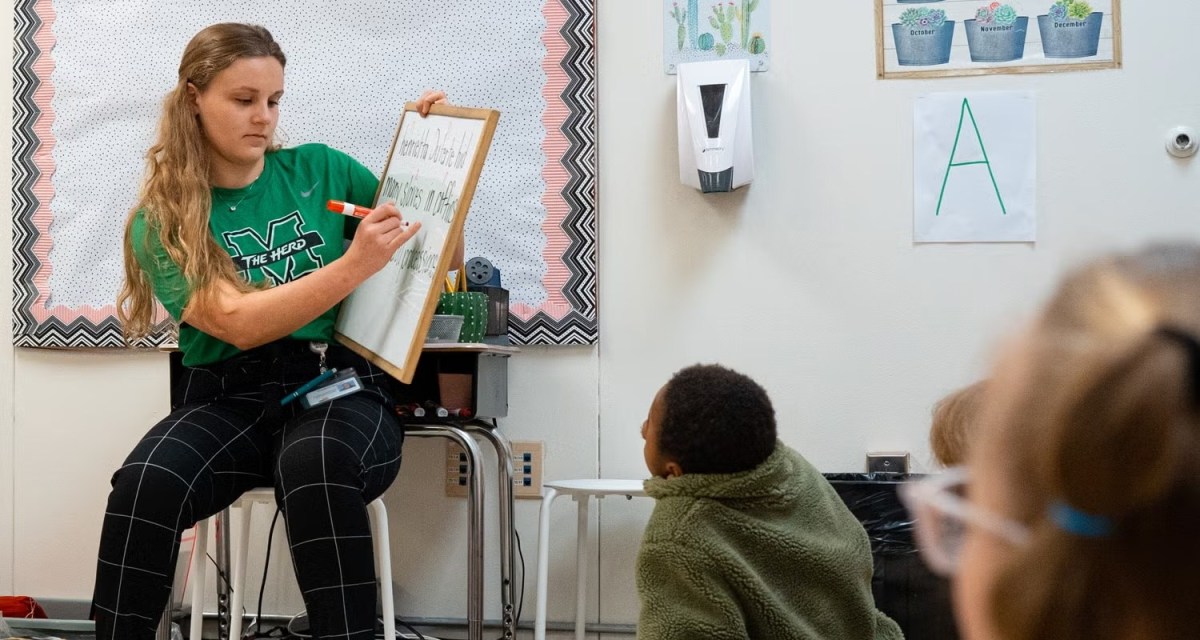
Welcome to Clinical Experiences
Welcome to the Clinical Experiences Program in the Marshall University College of Education and Professional Development (COEPD). Clinical experiences are the foundation of educator preparation, providing candidates with meaningful opportunities to connect educational theory to authentic classroom practice while developing the knowledge, skills, and professional dispositions essential for a successful career in education.
Beginning with introductory field experiences and continuing through Residency II, candidates engage in a carefully sequenced progression of increasingly complex clinical assignments. These experiences are designed to strengthen instructional practice, foster reflective decision-making, and prepare candidates to positively impact the academic, social, and emotional growth of P–12 learners. Clinical experiences are made possible through strong partnerships among Marshall University faculty, mentor teachers, school administrators, and P–12 school districts. Together, these partners provide supportive learning environments that prepare candidates to become effective, ethical, and reflective educators.
This handbook serves as your primary guide throughout the clinical experience sequence. It outlines program expectations, policies, procedures, and available resources while defining the responsibilities of teacher candidates, mentor teachers, university supervisors, and the Clinical Experiences Office. Candidates are expected to become familiar with the handbook before beginning their first placement and to refer to it throughout their educator preparation program.
Purpose of this Handbook
The Clinical Experiences Handbook is designed to provide clear guidance throughout each stage of the educator preparation program. Specifically, it will:
- Explain the sequence and purpose of each clinical experience.
- Communicate university and school-based policies and expectations.
- Define the roles and responsibilities of candidates, mentor teachers, university supervisors, and the Clinical Experiences Office.
- Describe observation, assessment, and evaluation procedures.
- Outline professional and ethical expectations for all clinical placements.
- Identify resources that support candidate success.
- Promote reflective practice and continuous professional growth.
This handbook should be used in conjunction with Marshall University policies, educator preparation program requirements, and applicable school district procedures.
About the College of Education and Professional Development
The Marshall University College of Education and Professional Development (COEPD) prepares highly effective educators, school leaders, counselors, and human service professionals who are committed to improving the lives of learners and strengthening schools and communities. Educator preparation at Marshall University combines rigorous academic coursework with extensive clinical experiences to ensure candidates graduate with the knowledge, skills, professional dispositions, and practical experience necessary for success in today’s diverse educational settings. The COEPD is committed to preparing professionals who are knowledgeable, reflective, ethical, collaborative, and responsive to the needs of all learners.
Mission
The mission of the College of Education and Professional Development is to provide creative teaching and challenging learning opportunities for students, faculty, staff, and community partners in a supportive environment that emphasizes:
- Quality
- Authenticity
- Critical Reflection
- Collaboration
- Ethical Practice
- A belief in the value of all students
These principles guide every educator preparation program and are reflected throughout the clinical experience sequence.
Clinical Practice Philosophy
Marshall University believes effective educators are prepared through meaningful partnerships between the university and P–12 schools. Clinical experiences provide authentic opportunities to integrate educational theory with classroom practice while working alongside experienced educators who model effective instruction, professional leadership, and ethical practice.
Through a carefully designed sequence of field experiences, candidates assume increasing responsibility for planning, instruction, assessment, classroom management, collaboration, and professional decision-making. This developmental approach supports the growth of confident, reflective educators who are prepared to meet the needs of diverse learners.
Clinical Experiences at Marshall University
Clinical practice is the cornerstone of educator preparation within the College of Education and Professional Development. Each experience is intentionally designed to provide authentic opportunities for candidates to observe, participate, teach, assess learning, collaborate with educators, and gradually assume the responsibilities of a professional teacher. The clinical sequence follows a developmental model in which candidates demonstrate increasing levels of independence and instructional responsibility.
Clinical Progression
EDF 200
Exploratory Observation
↓
EDF 202
Guided Participation
↓
EDF 204
Advanced Clinical Participation and Collaborative Instructional Practice
↓
Residency I
Co-Teaching and Guided Practice
↓
Residency II
Full-Time Clinical Practice
Additional information about each phase is provided in Chapter 2: Clinical Experience Framework and Progression.
Clinical Experience Goals
Upon completion of the clinical experience sequence, candidates will be able to:
- Apply educational theory within authentic classroom settings.
- Design and deliver effective instruction for diverse learners.
- Use assessment data to improve student learning.
- Integrate technology to enhance teaching and learning.
- Demonstrate effective classroom management practices.
- Collaborate professionally with educators, families, and community partners.
- Reflect on instructional effectiveness and implement continuous improvement.
- Demonstrate the competencies required for recommendation for educator licensure.
Partnerships with P–12 Schools
Marshall University values collaborative partnerships with public schools, private schools, educational agencies, and community organizations. Mentor teachers, school administrators, and COEPD faculty work together to provide candidates with meaningful learning experiences, ongoing coaching, and professional support throughout each clinical experience. These partnerships ensure candidates develop the confidence, competence, and professional judgment necessary for successful careers in education.
Professional Expectations
Teacher candidates represent both Marshall University and the teaching profession. Professional conduct is expected throughout every clinical experience. Candidates are expected to:
- Maintain confidentiality regarding students, families, and school personnel.
- Demonstrate punctuality, dependability, and consistent attendance.
- Dress professionally according to school and university expectations.
- Communicate respectfully and professionally with all stakeholders.
- Follow school, district, and university policies.
- Demonstrate integrity, responsibility, and ethical conduct.
- Accept and apply constructive feedback to improve professional practice.
- Maintain appropriate professional boundaries, including responsible use of technology and social media.
Additional expectations are described in Chapter 5: Professional Expectations and Ethical Conduct.
Clinical Readiness Checklist
Before reporting to a clinical placement, candidates should:
✓ Review this handbook.
✓ Complete all required admission and placement requirements.
✓ Submit required background checks and clearances.
✓ Verify placement information and reporting dates.
✓ Establish communication with the mentor teacher.
✓ Monitor Marshall University email regularly.
✓ Review school policies and procedures.
✓ Prepare appropriate professional attire.
✓ Understand confidentiality and ethical expectations.
Key Personnel
| Role | Primary Responsibilities |
| Clinical Office | Coordinates placements, communicates clinical requirements, and supports candidates throughout the placement process. |
|
Teacher Candidate |
Demonstrates professionalism, actively participates in clinical experiences, completes required assignments, and reflects on professional growth. |
| Mentor Teacher | Models effective instructional practice, provides mentoring, supports candidate development, and participates in evaluations. |
|
School Administrator |
Supports clinical placements and fosters collaboration between the university and the school. |
Detailed role descriptions are provided in Chapter 4: Roles and Responsibilities.
Accreditation and Professional Standards
Marshall University’s educator preparation programs are designed to align with the expectations established by:
- Marshall University
- West Virginia Board of Education
- West Virginia Department of Education
- Council for the Accreditation of Educator Preparation (CAEP)
- Applicable national and state professional standards
Candidates demonstrate progress toward these standards through coursework, clinical experiences, observations, evaluations, reflective practice, and evidence of student learning.
Commitment to Continuous Improvement
The College of Education and Professional Development is committed to continuous improvement in educator preparation. Feedback from candidates, mentor teachers, university supervisors, school administrators, and P–12 partners is used to strengthen clinical experiences and improve outcomes for future educators and the students they serve. Candidates are encouraged to engage in reflective practice, seek constructive feedback, and use evidence to guide their professional growth throughout the educator preparation program.
Our Commitment
The Marshall University College of Education and Professional Development is committed to preparing knowledgeable, reflective, compassionate, and highly effective educators who positively impact schools and communities throughout West Virginia and beyond. Faculty, mentor teachers, university supervisors, and school partners are dedicated to supporting candidates as they develop the confidence, competence, and professional identity necessary for successful careers in education. We look forward to partnering with you throughout your clinical journey.
Chapter Summary
Clinical experiences provide the bridge between university coursework and professional practice. Through carefully sequenced field experiences, candidates develop the instructional knowledge, professional dispositions, and leadership skills necessary to become effective educators.
The next chapter introduces the Clinical Experience Framework and Progression, describing each phase of the clinical sequence and the increasing responsibilities candidates assume as they progress from introductory field experiences to Residency II.