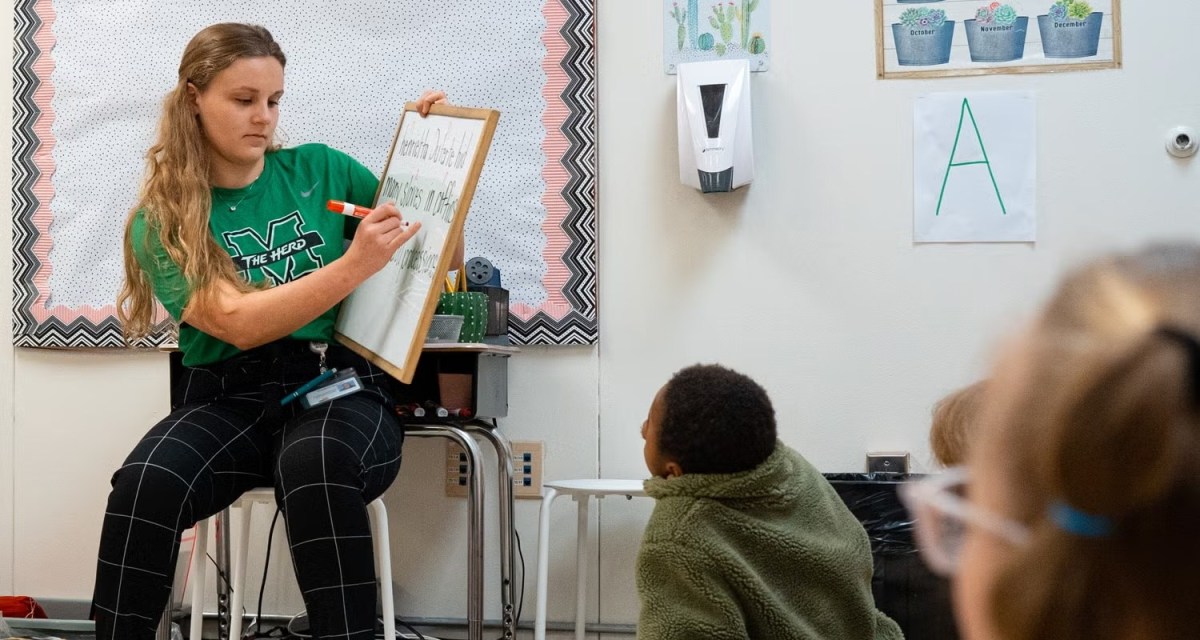
Welcome to the Marshall Professional Learning Community!
Welcome to the Professional Learning Community (PLC) of the Marshall University College of Education and Professional Development (COEPD). Clinical experiences are the foundation of educator preparation, providing candidates with meaningful opportunities to connect educational theory to authentic classroom practice while developing the knowledge, skills, and professional dispositions essential for a successful career in education.
Beginning with introductory field experiences and continuing through Residency II, candidates engage in a carefully sequenced progression of increasingly complex clinical assignments. These experiences are designed to strengthen instructional practice, foster reflective decision-making, and prepare candidates to positively impact the academic, social, and emotional growth of P–12 learners. These professional learning experiences are made possible through strong partnerships among Marshall University faculty, mentor teachers, school administrators, and P–12 school districts. Together, these partners provide supportive learning environments that prepare candidates to become effective, ethical, and reflective educators.
Clinical Experience Framework and Progression Overview
The clinical experience sequence is the cornerstone of educator preparation in the Marshall University College of Education and Professional Development. Building upon the philosophy and goals introduced in Chapter 1, this chapter describes the developmental pathway through which teacher candidates progress from introductory classroom experiences to full-time professional practice.
Clinical experiences are intentionally designed to provide candidates with opportunities to apply educational theory in authentic P–12 settings while developing the knowledge, skills, and professional dispositions necessary for effective teaching. Through structured observation, guided participation, collaboration, and supervised teaching experiences, candidates gradually assume increasing levels of instructional responsibility. Each phase of the clinical experience sequence builds upon previous learning. Candidates receive ongoing support and feedback from mentor teachers, university supervisors, faculty, and school partners as they develop their professional identity and readiness for the classroom. By completion of the clinical sequence, candidates are expected to demonstrate the competencies required for recommendation for educator licensure and successful entry into the teaching profession.
Clinical Experience Progression Model
The clinical experience sequence follows a developmental progression that moves candidates from observation and exploration to independent professional practice.
Each phase increases in complexity, responsibility, and independence while maintaining appropriate levels of support and supervision.
| Experience | Hours* | Primary Focus | |
| EDF 200 | 50 | Exploratory Observation | |
| EDF 202 | 50 | Structured Participation | |
| EDF 204 | 50 | Advanced Participation/Collaborative Instruction | |
| Residency I | 250 | Guided Teaching Practice | |
| Residency II | 400+ | Full-Time Clinical Practice | |
*Clinical hour requirements may vary by licensure program, state requirements, or program-specific expectations. Candidates should consult their program advisor and the Clinical Experiences Office for specific requirements.
Clinical Experience Learning Outcomes
Upon successful completion of the clinical experience sequence, candidates will be able to:
- Apply educational theory and research to classroom practice.
- Design and deliver standards-based instruction that supports diverse learners.
- Create positive, inclusive, and productive learning environments.
- Use assessment information to monitor student progress and improve instruction.
- Integrate educational technology effectively and ethically.
- Collaborate with mentor teachers, school professionals, families, and communities.
- Demonstrate professional, ethical, and culturally responsive practices.
- Reflect on instructional decisions and use feedback to improve teaching.
- Demonstrate readiness for professional licensure and independent classroom practice.
Phase 1: EDF 200 – Exploratory Field Experience
Purpose
EDF 200 introduces candidates to the teaching profession through structured observation and exploration of authentic school environments. This experience allows candidates to connect foundational coursework with classroom practice while developing an understanding of teacher responsibilities, school culture, and student learning.
Candidate Role
During EDF 200, candidates serve primarily as observers who engage in purposeful classroom exploration. Candidates begin developing professional dispositions by examining effective teaching practices and reflecting on the role of educators in supporting student success. Candidates will:
- Observe classroom instruction and learning environments.
- Identify effective teaching strategies and classroom practices.
- Examine teacher-student interactions.
- Connect observations to educational concepts and coursework.
- Begin developing an understanding of professional expectations.
Key Expectations – Candidates are expected to:
- Maintain professional dress, behavior, and communication.
- Demonstrate consistent attendance and punctuality.
- Follow school policies and confidentiality expectations.
- Complete required observation activities and assignments.
- Participate respectfully within the school environment.
Expected Outcomes – By the completion of EDF 200, candidates will be able to:
- Describe the roles and responsibilities of classroom teachers.
- Identify characteristics of effective instruction.
- Recognize the importance of classroom culture and student engagement.
- Explain how educational theory connects to classroom practice.
- Reflect on observations using professional language and evidence.
Phase 2: EDF 202 – Structured Observation and Participation
Purpose
EDF 202 transitions candidates from observation to active participation in classroom activities. Candidates begin developing instructional skills by assisting mentor teachers and engaging in guided teaching experiences. This experience provides opportunities for candidates to develop an understanding of lesson planning, classroom management, student support, and instructional decision-making.
Candidate Role
Candidates serve as guided participants who support classroom instruction under the direction of the mentor teacher. Candidates may:
- Assist with classroom routines and instructional activities.
- Support small-group or individual student learning.
- Participate in lesson preparation.
- Assist with instructional materials and classroom organization.
- Begin limited instructional delivery when appropriate.
Key Expectations – Candidates are expected to:
- Increase active participation in classroom activities.
- Communicate professionally with mentor teachers and school personnel.
- Demonstrate responsiveness to feedback.
- Reflect on instructional practices and student learning.
- Follow all university and school expectations.
Expected Outcomes – By the completion of EDF 202, candidates will be able to:
- Support classroom instruction under mentor teacher guidance.
- Demonstrate beginning skills in lesson planning and instructional delivery.
- Recognize effective classroom management strategies.
- Communicate professionally with educators and students.
- Reflect on their developing teaching practice.
Phase 3: EDF 204 – Advanced Participation and Collaborative Instructional Practice
Purpose
EDF 204 builds upon the foundational classroom participation experiences developed in EDF 202 by providing candidates with increased opportunities to engage in instructional planning, teaching, assessment, and classroom responsibilities. This experience represents a transition from assisting with instruction to actively contributing to the teaching and learning process. Candidates begin developing greater instructional independence while continuing to receive guidance and feedback from experienced educators. Through intentional participation in classroom activities, candidates strengthen their understanding of lesson design, instructional strategies, classroom management, assessment practices, and professional collaboration.
Candidate Role
During EDF 204, candidates serve as active participants in the classroom who contribute to instructional planning and implementation under the guidance of the mentor teacher. Candidates will:
- Assist in planning and preparing instructional activities.
- Deliver portions of lessons or small-group instruction.
- Support differentiated learning experiences.
- Assist with assessment and feedback processes.
- Participate in classroom management routines.
- Collaborate with mentor teachers to reflect on instructional effectiveness.
- Begin connecting instructional decisions to student learning outcomes.
Key Expectations – Candidates are expected to:
- Demonstrate increased initiative and responsibility within the classroom.
- Apply feedback to improve instructional practice.
- Develop and implement instructional activities with mentor teacher support.
- Use assessment information to support student learning.
- Communicate professionally with students, educators, and school personnel.
- Reflect on personal growth as an emerging educator.
Expected Outcomes – By the completion of EDF 204, candidates will be able to:
- Plan and support meaningful learning experiences.
- Deliver instruction with increased confidence and effectiveness.
- Apply classroom management strategies appropriately.
- Use assessment information to inform instructional decisions.
- Collaborate with mentor teachers and school professionals.
- Reflect on teaching practices and identify areas for continued growth.
- Demonstrate readiness for the increased responsibilities of Residency I.
Transition to Residency Experiences
The first three phases of the clinical experience sequence establish the foundation for professional practice. Through observation, guided participation, and increasingly independent instructional involvement, candidates develop the knowledge, skills, and professional dispositions needed for successful classroom teaching.
As candidates enter Residency I and Residency II, they move into more intensive clinical experiences requiring sustained instructional responsibility, professional collaboration, and demonstration of readiness for independent practice.
Phase 4: Residency I – Guided Clinical Practice
Purpose
Residency I represents a significant transition from introductory clinical experiences to sustained instructional responsibility. During this experience, candidates move beyond supporting instruction and begin actively co-planning, co-teaching, assessing student learning, and managing classroom responsibilities under the guidance of a mentor teacher. Residency I provides candidates with opportunities to refine instructional skills, develop confidence, and apply educational theory in increasingly independent ways while receiving ongoing coaching and feedback. The purpose of Residency I is to prepare candidates for the full-time teaching responsibilities expected during Residency II.
Candidate Role
During Residency I, candidates serve as developing classroom professionals who assume increasing instructional responsibility while collaborating closely with the mentor teacher. Candidates will:
- Co-plan lessons and instructional activities with the mentor teacher.
- Deliver regular classroom instruction.
- Develop and adapt lessons to meet diverse learner needs.
- Participate in assessment and evaluation of student learning.
- Apply classroom management strategies.
- Engage in professional collaboration with school personnel.
- Reflect on instructional decisions and student outcomes.
Key Expectations – Candidates are expected to:
- Demonstrate increased independence in planning and instruction.
- Establish positive relationships with students.
- Use assessment information to guide instructional decisions.
- Apply feedback from mentor teacher.
- Participate in classroom routines and professional responsibilities.
- Complete required observations, evaluations, and reflective activities.
Expected Outcomes – By the completion of Residency I, candidates will be able to:
- Design and deliver effective standards-based instruction.
- Demonstrate developing classroom management skills.
- Use formative and summative assessments to support student learning.
- Adjust instruction based on student needs and evidence.
- Collaborate effectively with educational professionals.
- Reflect on instructional practice and identify areas for continued growth.
- Demonstrate readiness for full-time clinical practice in Residency II.
Phase 5: Residency II – Full-Time Clinical Practice
Purpose
Residency II is the culminating clinical experience in the educator preparation program and represents full immersion into the responsibilities of the teaching profession. During Residency II, candidates assume substantial responsibility for classroom instruction while working under the supervision and guidance of a mentor teacher. This experience provides candidates with the opportunity to demonstrate readiness for independent teaching and recommendation for educator licensure.
Candidate Role
During Residency II, candidates serve as full-time clinical practitioners responsible for engaging in the daily work of an educator. Candidates will:
- Plan and deliver instruction for assigned classes.
- Manage classroom routines and learning environments.
- Assess student learning and use data to improve instruction.
- Differentiate instruction to support diverse learners.
- Participate in professional meetings and school activities.
- Collaborate with families, colleagues, and community partners.
- Engage in ongoing reflection and professional growth.
Key Expectations – Candidates are expected to:
- Demonstrate sustained instructional responsibility.
- Exhibit professional judgment and ethical decision-making.
- Establish a positive and inclusive classroom environment.
- Demonstrate measurable impact on student learning.
- Participate fully in the professional responsibilities of the school community.
- Complete all program, university, and licensure requirements.
Expected Outcomes – By the completion of Residency II, candidates will be able to:
- Demonstrate readiness for independent classroom teaching.
- Plan and implement effective instruction for diverse learners.
- Create a supportive and equitable learning environment.
- Use assessment evidence to improve student achievement.
- Collaborate professionally with educators, families, and communities.
- Reflect on practice as a lifelong learner.
- Demonstrate the competencies required for educator licensure.
Progression of Responsibility
Across the clinical experience sequence, candidates experience a purposeful increase in responsibility, independence, and professional decision-making.
| Clinical Experience | Candidate Development |
| EDF 200 |
Develops awareness of teaching, learning, and school environments through observation.
|
| EDF 202 | Participates in classroom activities and begins supporting instruction. |
| EDF 204 | Engages in collaborative instructional practice and assumes increased classroom responsibility. |
| Residency I | Develops instructional independence through co-teaching and guided classroom practice. |
| Residency II | Demonstrates readiness for professional teaching through full-time clinical practice. |
This progression ensures candidates develop confidence, competence, and professional identity through intentional, supported experiences.
Assessment Across the Clinical Experience Sequence
Candidate growth and readiness are evaluated continuously throughout all clinical experiences. Assessment is designed to provide meaningful feedback, support professional growth, and document progress toward educator licensure. Multiple measures are used to evaluate candidate development, including:
- Clinical observation rubrics.
- Lesson planning and instructional evaluations.
- Professional disposition assessments.
- Reflective assignments.
- Mentor teacher feedback.
- Candidate self-assessments.
- Evidence of student learning and instructional impact.
Assessment occurs through both formative and summative processes. Formative feedback allows candidates to identify strengths and areas for improvement, while summative evaluations provide evidence of readiness for advancement and licensure.
Clinical Experience Support and Feedback
Successful clinical experiences depend on strong communication and collaboration among candidates, mentor teachers, and school partners. Throughout the clinical sequence, candidates receive support through:
- Regular communication with mentor teachers.
- Feedback on instructional practice.
- Opportunities for reflection and revision.
- Collaboration with professional learning communities.
Candidates are encouraged to view feedback as an essential part of professional growth and to actively apply recommendations to strengthen their teaching practice.
Chapter Summary
The clinical experience framework provides a structured pathway for developing effective educators. Through intentional progression from observation to full-time teaching practice, candidates build the knowledge, skills, and professional dispositions necessary for success in diverse educational settings. Each phase of the clinical sequence provides increasingly complex opportunities for candidates to apply theory, refine instructional practice, collaborate with educators, and demonstrate readiness for professional responsibility. As candidates progress through clinical experiences, they are supported by a network of mentor teachers, university supervisors, faculty, and school partners committed to their success.
The next chapter explains clinical placement procedures, including placement processes, eligibility requirements, and expectations for participation in school-based experiences.