Beyond Tricks of the Trade
Inquiry, Adaptation, and the Art of Pedagogical Reinvention
Registration
Registration is closed.
Conference Theme
Higher education continues to shift beneath our feet. The rapid utilization and normalization of AI, ongoing enrollment fluctuations, new pressures on academic freedom, and the persistent aftershocks of the pandemic have reshaped our classrooms in ways both invigorating and disorienting. Many of us are teaching in environments where attention is fragmented, resources are stretched, and the pace of change feels relentless. And yet—these “interesting times” also invite us to reimagine what teaching can be.
Last year, this conference explored the playful, crafty, and sometimes subversive “tricks” that help us spark learning when the usual approaches fall flat. This year, we extend that conversation. What happens after the trick works? How do we build sustainable, inquiry-driven pedagogies that adapt to shifting student needs, technological landscapes, and institutional realities? How do we move from clever hacks to intentional reinvention?
This conference invites faculty, staff, and administrators from Marshall University and all regionally accredited colleges and universities to examine the evolving art of teaching with curiosity, creativity, and intellectual generosity. We welcome proposals that explore how pedagogical inquiry—formal or informal, playful or rigorous—can help us navigate uncertainty, deepen engagement, and cultivate resilient learning communities across modalities (asynchronous, virtual, hybrid, HyFlex, and traditional classroom environments).
Map
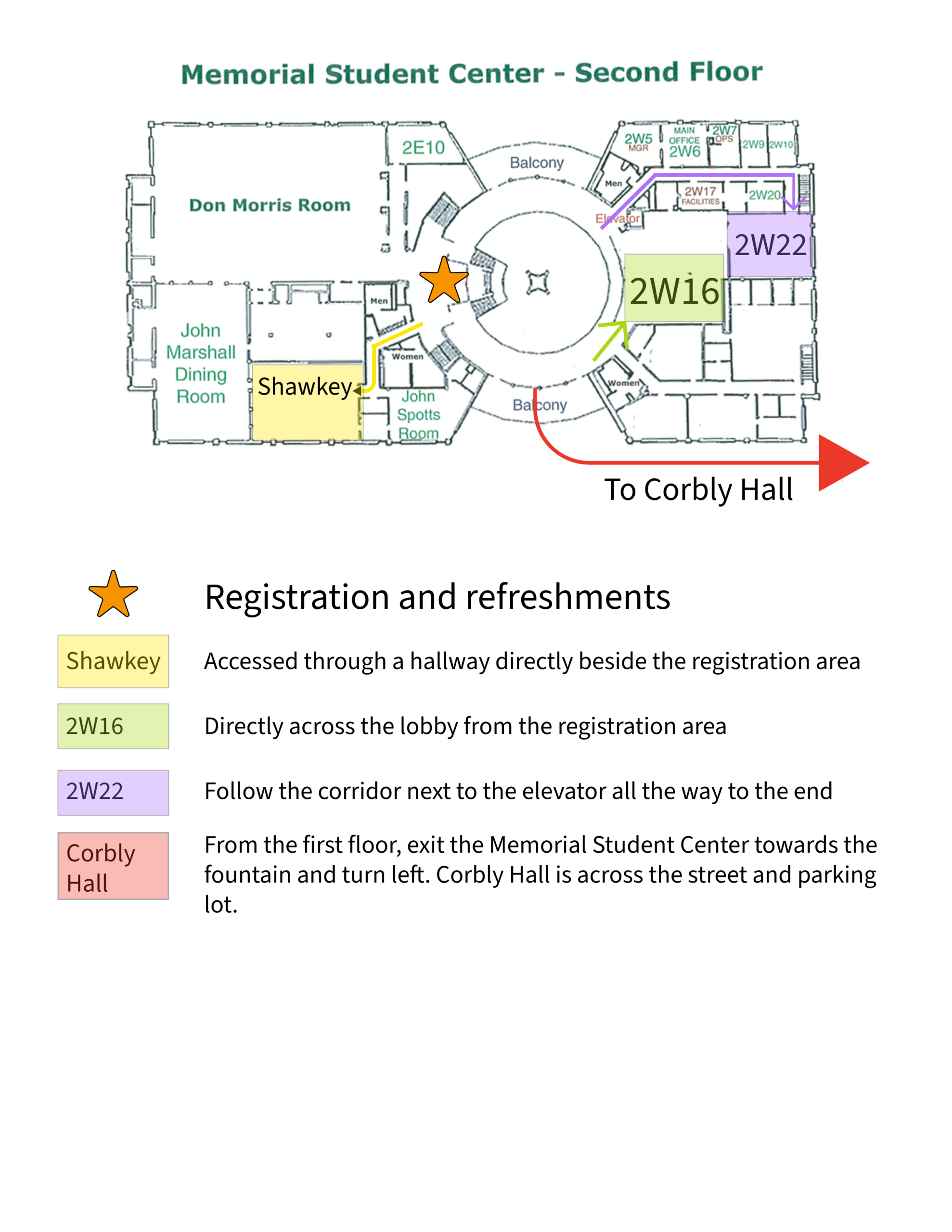
Virtual Attendance
You can join the iPED 2026 Team to see all the presenters’ materials and resources. Note: External attendees should email Cody Sharp (sharpc@marshall.edu) to be added to the Team.
Anybody can join the hyflex sessions virtually at the links below:
- Encouraging Risk Taking (8:30)
- From Fix-it to Habit (9:10)
- Reimagining General Education (10:35)
- Collaborating Smarter with Adobe PDF Spaces (11:50)
- The Dialogue Shift (1:30)
Schedule of Events
Downloadable pdf of schedule and rooms
8:00 – 8:30: Check in and Welcome
8:30 – 11:50: Morning Sessions
Reviewing the Use of AI in Higher Education Classrooms – Challenges and Opportunities for Moving Forward
Huanshu Yuan, Marshall University
This interactive presentation draws on extensive research to examine the pedagogical integration of artificial intelligence (AI) in higher education classrooms, informed by comparative and international case studies. It explores how AI technologies are currently used to support teaching, curriculum design, assessment development, and student engagement, as well as how students use AI in both academic learning and informal contexts. This presentation aims to foster a holistic and critical pedagogical framework for AI in higher education, highlighting instructional challenges, ethical considerations, and emerging opportunities for enhancing teaching and learning through AI-enabled approaches. (Face to Face)
Encouraging Risk Taking: Residential Strategies to Empower Students with Intellectual Disabilities in College Life
Mike Huesmann, Marshall University
This presentation examines how Resident Advisors (RAs) on college campuses foster risk-taking and decision-making among students with intellectual and developmental disabilities (IDD). Drawing on qualitative data from interviews with RAs across multiple institutions, the session highlights the “Peer-Plus-Mentor” approach, where RAs blend peer connection with intentional mentorship, to promote social connectedness, academic engagement, and self-determination. Attendees will learn how RAs scaffold everyday choices, encourage students to try new experiences, and provide real-time, individualized feedback as students navigate campus life. The presentation shares practical strategies such as scenario rehearsal, stepwise guidance, and reflective debriefing, which help students with IDD build confidence and independence. Implications for program design and RA training will be discussed, demonstrating how intentional residential supports can enhance inclusion and empower students with disabilities to thrive in college and beyond. (Hyflex)
Flip the Script! Using Flipped Classrooms to Increase Student Success
Stephen Deterding, Marshall University
A flipped classroom reverses the traditional model: students learn new material or new skills before class—often through short videos—and class time is used for guided practice. Students are thus able to get immediate feedback on their work and if they get stuck they can ask the professor for help instead of having to try to figure it out for themselves. Although flipped teaching offers clear benefits, creating materials and designing effective activities can feel challenging. In this presentation, I will outline the key advantages and limitations of flipped classrooms, share practical strategies for implementing them successfully, and demonstrate a quick and easy method for creating instructional videos. Participants will leave with tools and ideas they can use to incorporate flipped learning into their own courses. (Face to Face)
Integrating Artificial Intelligence into Online Teaching: Empowering Students and Enhancing Assessment Practices
Adam Beatty, University of Charleston
Calvin A. Lathan III, University of Charleston
Kevin Fields, University of Charleston
Artificial Intelligence (AI) is transforming education by reshaping both student learning and assessment practices. This session presents a dual-framework approach: teaching students how to ethically and effectively leverage generative AI, and integrating AI-assisted grading to enhance feedback and instructional efficiency.
Participants will explore strategies for embedding AI literacy, prompt design, critical verification, bias awareness, and responsible disclosure into online courses. The session also examines hybrid grading models where AI supports rubric alignment, automated essay scoring, and rapid formative feedback, while instructors retain evaluative oversight.
Drawing on recent research in AI-driven assessment and learning analytics, this presentation offers practical implementation strategies, policy considerations, and assessment redesign models that maintain academic integrity while leveraging AI as a collaborative learning partner. The goal is to move from AI prohibition toward pedagogically grounded, human-centered integration in online teaching. (Face to Face)
From Fix-It to Habit: Building Sustainable Digital Accessibility Practices
Heidi Blaisdell, Marshall University
Diana Adams, Marshall University
With the April 2026 ADA Title II digital accessibility compliance milestone reached, the conversation shifts from fixing content to sustaining accessible practices over time. This interactive session invites faculty to explore how small, habit‑based accessibility strategies can be embedded into everyday course development and revision workflows, making accessibility more manageable and sustainable. Participants will engage in hands‑on activities using Blackboard Ally and UDL‑aligned strategies while examining how digital accessibility supports Marshall University’s Student‑First Priorities and the Belonging standard in the H.O.M.E. Framework. Bring your laptop and be ready to work with your own course materials. (Hyflex)
Understanding Understanding: How Perceived Faculty Support Shapes Online Students’ Experiences
Wendi L. Benson, PhD, Marshall University
Shannon Miller-Mace, Marshall University
Gabrielle Casey, Marshall University
A sample of 149 Marshall Online students completed the Marshall Online Belongingness Survey. Results suggest online students tend to be more likely to seek support from professors when they think they’re understanding; students are more excited, have a stronger sense of belonging, enjoy their experience more, and feel more ready for online learning when they are willing to seek support from professors; and students feel a stronger sense of belonging and are more intent on reenrolling the following semester when they feel online professors are more understanding. Positive faculty-student relations may be an effective way to enhance online learning experiences. (Face to Face, Panel presentation)
From Reactive Teaching to Intentional Reinvention: Inquiry-Driven Pedagogy in an Age of AI and Uncertainty
Billy Gardner, Marshall University
Higher education is navigating rapid change driven by AI integration, shifting student engagement, and increasing faculty workload pressures. Many instructors have responded with quick adjustments, rewriting assignments, tightening policies, experimenting with new tools, but sustainable reinvention requires more than reactive fixes. This interactive session explores how inquiry-driven pedagogy can anchor intentional course redesign in times of uncertainty. Rather than centering on control or compliance, we focus on clarifying core learning priorities and designing assignments that emphasize thinking processes, reflection, and adaptability. Participants will engage in a guided, face-to-face redesign activity, applying practical frameworks to one of their own assignments or learning experiences. Emphasis will be placed on fostering engagement, belonging, and intellectual risk-taking while maintaining faculty sustainability. Attendees will leave with adaptable redesign tools, guiding questions for ongoing pedagogical inquiry, and strategies for moving from short-term “teaching tricks” to intentional, resilient teaching practice. (Face to Face)
Reimagining General Education: Building the Marshall Mindset
April Fugett, Marshall University
Ben Eng, Marshall University
Casey Baker, Marshall University
Tricia Ball, Marshall University
Chris Atkins, Marshall University
Marshall University is redesigning its General Education curriculum to create a more coherent, scaffolded learning experience centered on four pillars: Communication Competence, Technology and Information Literacies, Design, Discovery, and Critical Thinking, and Responsible Citizenship. This new structure reframes GenEd as a developmental pathway culminating in the Marshall Mindset, a set of durable skills and habits—initiative, resilience, wellness, and career readiness—woven throughout students’ academic journeys. Cornerstone and Capstone experiences serve as bookends, emphasizing metacognition, integration with the major, and authentic assessment. The panel will share the collaborative process behind the redesign, highlight draft learning outcomes, and discuss faculty development and certification structures. Attendees will gain insight into building a mindset driven, institution wide GenEd culture. (Hyflex)
Playful strategies in the classroom for enhancing students’ sense of belongingness.
Dr. Gregory Breeden, Marshall University
Dr. Kumika Toma, Marshall University
Dr. Liz Pacioles, Marshall University
Dr. Georgiana Logan, Marshall University
The purpose of this interactive presentation is to explore belongingness in the classroom. Belongingness refers to “a psychological concept that reflects an individual’s perception of social support and acceptance.” A sense of belongingness can consist of a range of dimensions, including feeling accepted, known, connected, and welcomed, among other concepts. Playful pedagogy is an instructional approach that can address several of these varied conceptualizations of belongingness. The presenters of this interactive session will introduce strategies that incorporate play, fun, humor, creativity, and joy with the aim of increasing feelings of belongingness in the classroom. Attendees will reflect on their own definition of belongingness and their experiences utilizing playful strategies. (Face to Face)
11:50 – 12:50: Lunch
Collaborating Smarter with Adobe PDF Spaces: Enhancing Teamwork Through Seamless Document Sharing
Jimil Vineyard, Marshall University
Adobe PDF Spaces Team
This session focuses on Marshall University’s partnership with Adobe and how that collaboration brings Adobe PDF Spaces to the Marshall community. Attendees will explore how PDF Spaces has been used across teaching, learning, and academic collaboration to support curriculum development, shared review of instructional materials, interactive feedback, and organized access to course content. The session highlights real instructional and student‑centered use cases that leverage familiar PDF tools and AI‑supported workflows to reduce version confusion, improve accessibility, and promote more effective collaboration.
12:50 – 4:55: Afternoon Sessions
Re-engaging Online Learners through Video Based Discussion Posts: A Practical Approach for Building Connection
Jillian Hovatter, Marshall University
Online courses can unintentionally heighten feelings of isolation, which often reduces student participation and investment. This session demonstrates how structured video discussion posts can help re-engage students by increasing presence, community, and authentic interaction. Using Panopto and Blackboard, I will show how short video posts and guided reply prompts create a more conversational environment where students address one another by name, reference course material more naturally, and feel connected to their classmates. Attendees will see examples of assignment structures, prompts, and workflow steps they can adapt to their own courses. Participants will leave with a practical and replicable method for using video discussions to encourage curiosity, improve engagement, and build community in online learning spaces. (Face to Face)
Experiential Learning: From the Classroom into the Campus Community
Christy Zempter, Shawnee State University
Noah Carter, Shawnee State University
Camryn Pierson, Shawnee State University
As we developed the new communication major at Shawnee State University, we intentionally built experiential learning opportunities into many of our classes to ensure practical experience for all our students across a range of communication contexts. The success of project-based classes such as podcasting, strategic communication, and social media management drew the attention of campus staff and upper-level administrators. As a result, we have been able to create co-curricular internship opportunities to support the university’s communication needs and allow students to gain even more practical experience in their field. I will be joined by two students, who will share their perspectives: Noah Carter, who is currently working on an internship supported by the associate provost’s office to help us publicize our annual student and faculty research presentations; and Camryn Pierson, who started an internship this semester with the university’s communications office. (Face to Face)
Marshall University: Active Learning Technology Training
Ian Wright, T1V
Our goal with our workshop is to provide a learning session on how to use Marshall’s ThinkHub Education tools to support your classrooms. Fundamentals will include on-hand demos, teaching examples, and personalized tips and tricks for those interested in one-on-one learning. (Face to Face)
Rubrics of Mass Instruction: Designing Assignments in the Age of AI
Jamie Warner, Marshall University
Generative AI exposed an assumption higher education has relied on for centuries: That the academic work students submit accurately reflects what they’ve learned. Students, of course, have been finding creative ways around that assumption for just as long. AI simply makes the gap harder to ignore. Students can now produce polished academic work with remarkably little cognitive effort, weakening the connection between performance and learning even further.
This session argues that the challenge posed by AI is not just about academic integrity. It’s also about assignment design. Drawing on research in retrieval practice, desirable difficulties, metacognition, and cognitive friction, this presentation explores how assignments can function not simply as assessments of learning, but as experiences that actively generate it. We’ll examine practical approaches, including low-stakes quizzes, in-class activities, iterative writing, discussion structures, and even well-designed multiple-choice exams, that quietly pull students into deeper thinking before they fully realize they’re doing it. (Face to Face)
The Dialogue Shift: Scaling Engagement and Career Simulations with Blackboard AI Conversations
Chase Lucas, Marshall University
Michelle Morrison, Marshall University
Mary Welch, Marshall University
How can AI move from a “shortcut” to a “scaffold”? Marshall Online leverages the Blackboard AI Conversation tool to bridge the gap between digital isolation and professional readiness. This HyFlex session demonstrates how AI Role-play humanizes the student entry point through our Undergraduate Online Orientation module, “Finding Your Why with AI,” where an AI coach helps students uncover intrinsic motivators. Furthermore, we showcase how this same tool builds professional resilience through high-stakes career simulations, allowing students to practice “difficult” professional communications in a safe, repeatable environment. Join us to explore how AI role-play fosters early belonging and prepares students for real-world conflict resolution, shifting the narrative from AI as an academic threat to a powerful pedagogical partner. (Hyflex)
Teaching With AI, Learning with Communities: A Framework for Empathy, Voice, and Sustainability
Britani Black, Marshall University
Airelle Bell, Marshall University
As AI becomes increasingly embedded in teaching and learning, community‑based learning (CBL) educators face pressing questions about how to use these tools without weakening the relational and human foundations essential to meaningful engagement. This session introduces a human‑in‑the‑loop approach that positions AI as a tool for listening to communities rather than speaking for them. Participants will learn strategies for designing prompts that foreground community strengths, elevate local expertise, and avoid deficit‑based narratives. Through examples of AI‑assisted interview analysis, partnership communication, and workflow planning, the session demonstrates how AI can support reflection, empathy, and deeper understanding while maintaining ethical storytelling practices. The workshop also addresses faculty sustainability, helping participants distinguish which CBL tasks AI can streamline—and which must remain rooted in human connection, co‑creation, and relationship‑building. Attendees will leave with practical tools for integrating AI in ways that uplift community voice, cultivate student empathy, and sustain meaningful CBL partnerships. (Face to Face)
Low-Lift, High-Impact: Building AI-Resilient Assignments through Multimodal Pedagogy
Shauna Chung, Adobe
Nathan Araya, Adobe
Are you curious about how to make your assignments more AI-resilient and engaging? Join the Adobe Education team for a hands-on workshop introducing a suite of digital tools that offer expressive ways for students to make their thinking visible. In this session, you’ll explore how educators across disciplines are leveraging webpages, graphics, presentations, and videos to support student creativity, authentic assessment, and process-driven learning. Bring a laptop and a syllabus or assignment you’d like to refresh. You’ll leave with ready-to-use ideas for your Summer and Fall courses, plus access to templates and adaptable resources for teaching and learning. (Face to Face, Workshop)
Beyond the Screen: Generating Online Engagement that Matches Face-to-Face Learning
Roxanne Aftanas, Marshall University
Joni Magnusson, Marshall University
This workshop equips faculty with strategies to create meaningful, high‑energy engagement in online courses that parallel the interaction and intellectual depth of face‑to‑face learning. While many instructors excel in traditional classroom settings, transferring that level of participation to virtual environments presents unique challenges. Drawing on our experience in online teaching and digital course design, we will demonstrate intentional approaches to fostering active participation, a sense of community, and sustained student motivation. Because online engagement must be deliberately designed, the workshop emphasizes structures that promote clarity, authentic dialogue, and deeper thinking. We will also address common obstacles such as Zoom fatigue, discussion board overload, camera expectations, equitable participation, and the balance between flexibility and accountability. Participants will leave with practical, immediately applicable tools for building instructor presence, enhancing interaction, and designing online activities that encourage consistent and meaningful student involvement. (Face to Face, Workshop)