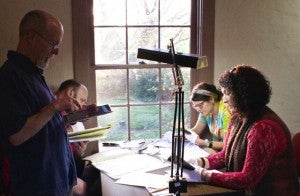
Each semester, the Graduate Humanities Program engages the intersection of the arts, literature, culture, and history within an open, exploratory, and experimental educational environment.
Students enrolled in the Graduate Humanities Program explore broad interdisciplinary issues through a diverse array of course offerings. Most of these are offered in a virtual seminar format: discussion-based graduate-level courses focused on reading, open and regular dialogue, collaborative and interactive interpretation, research and writing.
While several seminars are discipline-specific (our core curriculum, for example), most are designed to go beyond individual disciplines and enlist students in the cross-disciplinary study of the humanities.
Click on the links below for registration information for individual seminars. You can find general registration information on the MU Registrar website.
For previous seminar schedules, see our “Previous GHP Seminar Schedules” site.
Before joining any of our seminars, familiarize yourself with the Program’s Seminar Rules of Engagement.
Fall 2026
CULS 600: Selected Topics – Appalachian Studies Research, Arranged (VIRTUAL) (contact Director)
For students enrolled in the Appalachian Studies Certificate who are working on research projects in the Appalachian region. Registration by permission only. Contact the Director.
CULS 611: Appalachian Studies: Themes & Voices (VIRTUAL) (Pleska), Mondays, 7 – 9:50 PM
This interdisciplinary course orients students to the significant issues and research in Appalachian studies. Important political, social, and cultural issues will be considered. Research areas are introduced.
- Cat Pleska holds an MFA in creative nonfiction from Goucher College. She is a 7th generation West Virginian and her memoir, Riding on Comets, was published in 2015 by WVU Press. She is a former book reviewer and radio essayist, and is currently working on a collection of travel/personal essays, The I’s Have It: Travels in Ireland and Iceland.
HIST 600: Selected Topics – Museum Studies (VIRTUAL) (Campbell), Thursdays, 7-9:50 PM
This course introduces the field of museum studies and explores curatorial ethics, institutional governance, and the role of museums as centers for community engagement and education. Participants will explore the development and operation of museums, galleries, and heritage sites within a contemporary, interdiscplinary context.
- Elizabeth Campbell is a professor of education in the Department of Learning, Teaching, and Curriculum at Appalachian State University. She has interests in collaborative and community-based research and writing. She is an author of the Graduate Humanities Program book project, I’m Afraid of that Water: A Collaborative Ethnography of a West Virginia Water Crisis, and other works on community-based and collaborative ethnography, including Doing Ethnography Today and Re-Imagining Contested Communities.
HUMN 604: Expository Writing for Research (VIRTUAL) (Lassiter), Tuesdays, 7 – 9:50 PM
This core writing course develops proficiency in writing for research.
- Luke Eric Lassiter is director of the Graduate Humanities Program and professor of humanities and anthropology.
HUMN 650 – Special Topics – Independent Studies arranged between instructor and student (contact Director to arrange course)
For students who need to conduct independent research and/or reading in a specific topic in the humanities, the Program will offer independent studies in those topics as funds allow. Contact the Director for more information. Examples of Special Topics might include:
- Museum Studies
- Film Criticism
- Studies in Appalachian Music
- Studies in Poetry
- Language and Communication
HUMN 680 – Independent Research Symposium, Arranged (contact Director)
A pro-seminar required of all Humanities degree students who are beginning the thesis or final project. Arranged with the Program Director.