Performance-Based Compensation

At Marshall, performance evaluations are an important part of the University’s commitment to recognizing employee contributions and supporting professional growth. The annual evaluation process provides supervisors and employees with a structured opportunity to discuss accomplishments, review progress toward established goals, and identify opportunities for continued development. These conversations help ensure that individual performance aligns with departmental objectives and the broader mission of the university.

When authorized by the university, merit-based compensation adjustments may be considered as part of the annual performance evaluation cycle. Evaluation outcomes help inform compensation recommendations by providing documented evidence of performance and overall effectiveness in fulfilling job responsibilities. In addition to evaluation results, compensation decisions may also consider factors such as

  • internal equity
  • market competitiveness
  • evolving job responsibilities
  • institutional priorities
  • available funding.

While strong performance is an important factor in compensation considerations, a positive evaluation does not automatically guarantee a salary increase. All compensation adjustments are subject to institutional budget availability, university policies, and appropriate administrative approvals. Marshall University is committed to maintaining fair, consistent, and transparent compensation practices that recognize employee performance while supporting responsible stewardship of university resources.

Compensation Philosophy

Compensation plays a critical role in attracting, motivating, and retaining talented employees. Our compensation model is designed to establish competitive pay levels, recognize work performance, and ensure that compensation decisions are administered consistently and equitably.

Our system considers both external labor market conditions and internal equity while aligning compensation practices with institutional priorities and organizational goals. By linking compensation decisions to documented performance outcomes, the model supports transparency, fairness, and accountability across the organization.
Compensation and Performance
A fair and effective compensation system should recognize employee performance, support professional growth, and align individual contributions with organizational goals.

What Is Merit-Based Compensation?

Merit-based compensation connects salary increases to demonstrated employee performance rather than tenure alone. Employees who meet or exceed performance expectations may be eligible for merit increases that reflect their contributions to organizational success.

This approach encourages excellence, promotes accountability, and ensures that compensation reflects meaningful performance outcomes.

Key Components

  • Recognition of individual performance and contributions
  • Alignment between employee achievements and organizational priorities
  • Clear guidelines for compensation decisions
  • Consistent application across departments and roles

Merit Increase Guidelines

Merit increases are typically determined by a combination of:

  • Performance evaluation rating
  • Available merit funding for the fiscal year
  • Position within the salary range
  • Organizational budget considerations

While performance ratings guide merit decisions, compensation adjustments are administered in accordance with institutional compensation policies and available resources.

Principles and Benefits of the Model

Performance evaluations provide the foundation for merit-based compensation decisions. By documenting performance through structured evaluations, supervisors can assess individual contributions in a consistent and equitable manner.

Evaluation results help guide compensation adjustments by identifying employees who demonstrate strong performance, leadership, and commitment to organizational goals. This connection between evaluation and compensation helps ensure that pay decisions reflect documented performance outcomes and organizational priorities.

Principals:

  • Competitive Compensation – Pay levels are designed to remain competitive within relevant labor markets, helping recruit and retain talented employees.
  • Performance Recognition – Employees demonstrating strong performance may be eligible for merit increases that reflect their contributions and achievements.
  • Equity and Consistency – Compensation decisions are guided by clear policies and procedures to ensure fairness across roles and departments.
  • Transparency – Employees should understand how performance is evaluated and how compensation decisions are made.
  • Professional Growth – Performance management supports ongoing development through feedback, goal setting, and continuous improvement.

Benefits:

  • Clear expectations for employee performance
  • Increased motivation and engagement
  • Recognition of high-performing employees
  • Alignment between individual work and organizational goals
  • Support for continuous improvement and professional development

Merit Pay Matrix

Our merit increase model uses a two-factor approach that combines:

  1. Compa-Ratio (Position within Salary Range)
  2. Performance Rating

Market alignment ensures salary ranges align with jobs with the same industry, location, and job level.

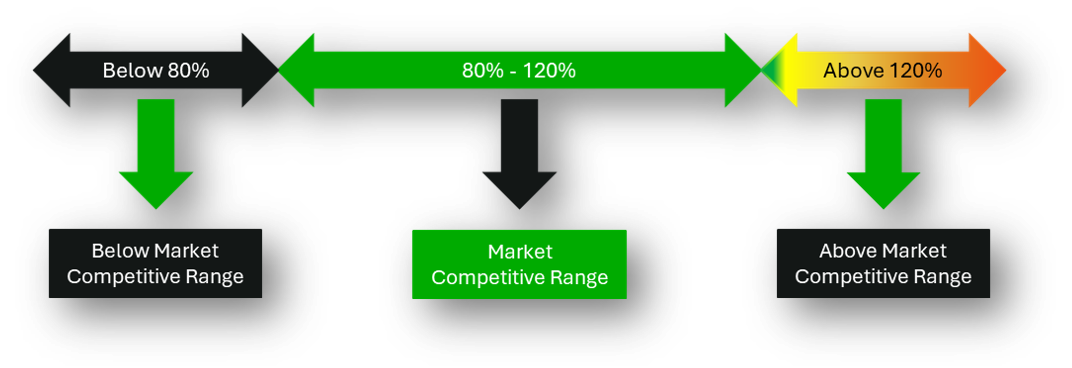
Market competitive pay ranges show what other employers are paying for a similar role in the same industry, location, and job level. Marshall University’s market competitive range is between 80% & 120% of the range midpoint.


By evaluating both performance and salary position, the model helps guide compensation decisions in a consistent, transparent, and data-driven manner. This structure allows the organization to reward high performance while also supporting market alignment and internal equity.

Important Note:

The merit pay matrix serves as a guideline for salary increase decisions. Final compensation adjustments may also consider:

  • Available merit funding
  • Institutional budget considerations
  • Market alignment
  • Other approved compensation adjustments


Performance Rating

Performance ratings reflect how well an employee meets or exceeds established expectations for their position. Higher performance ratings correspond with larger potential merit increases.

Compa-Ratio

Compa-ratio represents how an employee’s current salary compares to the midpoint of the salary range for their position. Employees with salaries further below the midpoint may receive larger increases to support market alignment, while employees closer to the top of the range may receive smaller percentage increases.

Example

An employee with:

  • Performance Rating: 3.2 (Exceeds Expectations)

  • Compa-Ratio: 75%

Would fall into the 4% merit increase range.

Training for Employees and Supervisors

For training and guidance on compensation and performance evaluations performance evaluations, register below on our Training and Development page.

Visit the HR Training Schedule